

Bekeme Masade suntains
Pride Magazine Nigeria (PNG) interviews Bekeme Masade (BM), the Chief Executive Officer of CSR-in-Action, a social business networking platform and advisory enterprise in Lagos. In this interview she tells us more about the organisation, and also speaks about her philosophy of life and perspective on the philanthropic sector in Nigeria.

PNG: We appreciate your granting us this interview. To start, can you introduce yourself to our readers, where you were born, where you grew up, what it was like growing up?
BM: My name is Bekeme Masade-Olowola. I was born, raised and still live in Lagos, Nigeria. I am a natural entrepreneur who sees opportunities everywhere. But what stands me out is that I love to find solutions for issues around me which led me to founding and currently managing CSR-in-Action, a social enterprise dedicated to promoting ethical and sustainable governance, women and youth empowerment, and sustainable development in Nigeria, through established programmes and strategic consultancy for businesses and governments. I am a writer – currently only of non-fiction such as biographies – and an editor, as well as a public relations professional.
Growing up was fun as I had 3 siblings in the same age range and we had a mum whose primary objective was keeping us safe and happy. She got us to volunteer with her Inner Wheel District 911 and that was where my passion for humanitarian work grew from.
PNG: Why did you choose to study the subject you did at university and how has it helped you in your career path?
BM: For my first degree, I was to study Law, but when that didn’t work out, I ended up in the English Department of the Arts Faculty. However, I am lucky that I did end up in English as the course of study was very much aligned to my strengths and has helped me in the articulation needed for the work I do now, which requires volumes of professionally written documentation.
I am an Emerging Leader of the Harvard Kennedy School because I have a passion to lead development. I hold a Merit in International Human Resource Management & Employment Relations (MSc) from the prestigious University of London, Queen Mary College because at the time, I thought that a HR twist to International Relations was a good path to follow. Considering what I am doing now, I wasn’t too wrong as my course covered organisational therapy, public relations, organisational change management, cross-cultural management and equality and diversity.
While in the UK, I worked in project management and policy performance measurement and evaluation with the Royal Borough of Kingston and Surrey County Council where I took part in stakeholder engagement, was involved in discussions on racial mainstreaming, took part in the designing of social policy frameworks as well as mechanisms for monitoring and evaluating activities of the councils ranging from housing, environmental management, supplier management, to overall performance.
All of these experiences set me up for the time when I identified the massive potential for sustainable growth in the corporate world and the gaps therein and went ahead to set up CSR-in-Action; initially just advocacy alone, but now consulting.
PNG: What is CSR? Please explain for those unfamiliar with the term.
BM: Corporate Social Responsibility is the continuing commitment by business to behave ethically and contribute to economic development as it relates to internal and external stakeholders, whilst ensuring that it manages its activities in such a way that there is no negative impact to future generations. It is the way businesses can factor into the global sustainability agenda; the way a smart business can ensure that it stays relevant and useful for the long term.
Having said that, at CSR-in-Action, corporate is the dictionary and original meaning of ‘collective’. In order words, our name actually means Collective Social Responsibility, as not just one stakeholder group is responsible for development.
PNG: When did CSR-in-Action come into being and what was the idea behind starting the organisation?
BM: I started this first-of-its-kind enterprise in 2010 because there was a challenge that wasn’t being addressed. What I started is a movement for good corporate and private citizenry and collective action and when I started, people told me they weren’t ready for this, but I was persistent.
CSR-in-Action was also established because I wanted to carry on the legacy of my late mother’s philanthropic acts. She would give you her last and go hungry, and was hailed as a provider amongst kith and kin. I wanted to build on that to ensure that beyond giving people fish, there was provision for teaching even much more people to fish and be self-reliant, and for there to be equity and justice.
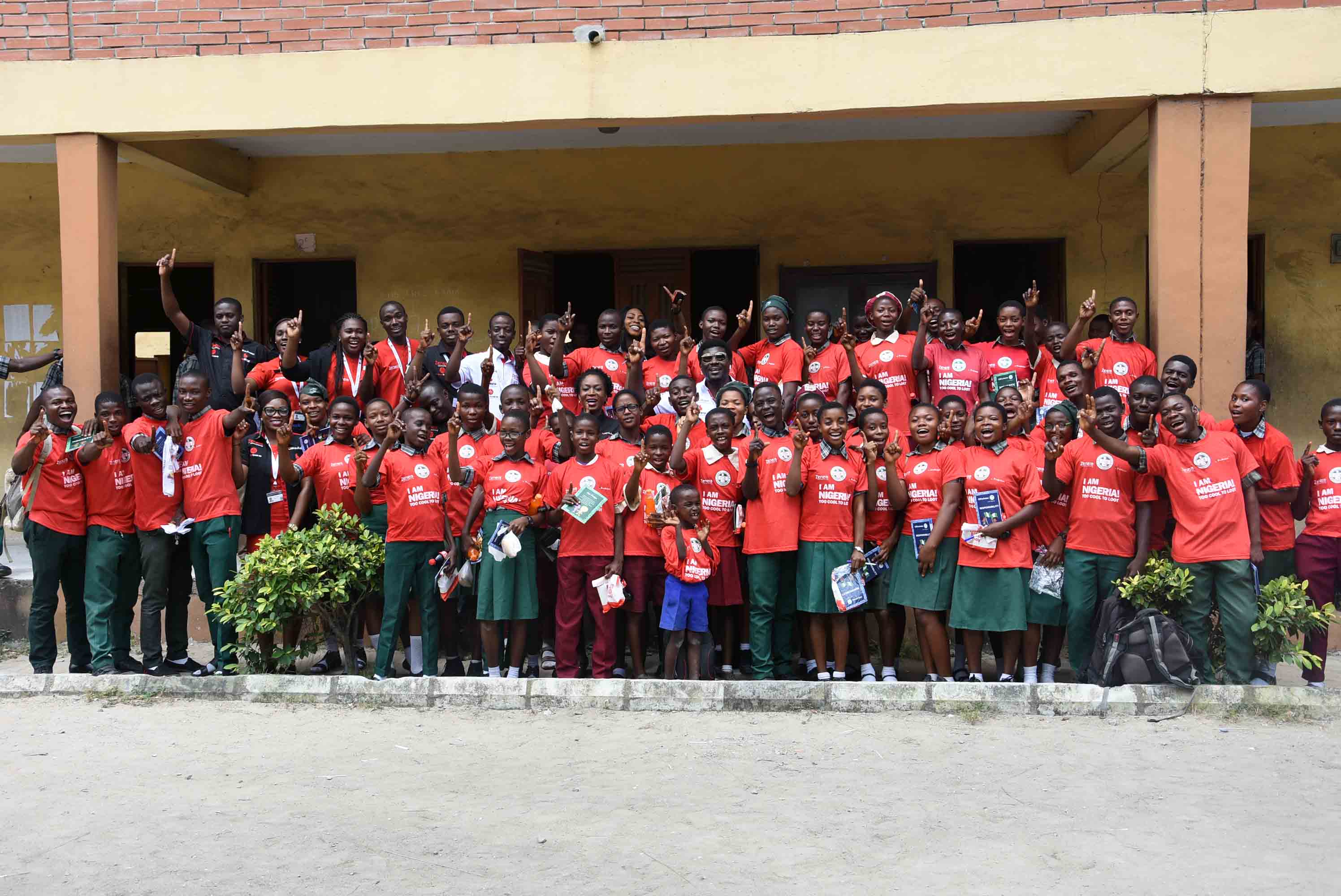
CSR-in-Action is a multi-platform enterprise that creates opportunity for thought leadership in the structured development space, provides one-stop data for practitioners, match-makes cross-sectorial partners, provides training and strategic support such as event management and CSR strategy development. We also act as an advisory body to institutions on sustainability principles and corporate social responsibility ethics.
PNG: We understand that CSR-in-Action has evolved into three lines of business: CSR-in-Action Consulting, the College of Sustainable Citizenship and CSR-in-Action Advocacy. Can you tell us about the focus of these three lines?
BM: CSR-in-Action Consulting is an African-focused consultancy delivering long-term value to corporate entities through pioneering and bespoke sustainability strategies, networking, performance management, ethics infusion and corporate character development. For our sustainability audits, we have a license from AA1000 and I have excelled in an exam organised by the Sustainability Accounting Standards Board (SASB) in the US.
CSR-in-Action Advocacy as an arm of CSR-in-Action aims to drive collective social action in Africa towards creating sustainable shared value. This is done using our flagship programs, which include – Sustainability in the Extractive Industries (SITEI) Conference, The Good Citizen, and the Collective Social Investment Report. We also have annual C-PET Workshops – CSO Professionalism and Ethics Training Workshops – that are funded by Access Bank.
The College of Sustainable Citizenship (CSC) is our citizenship, sustainability and leadership training institute, with a focus on teaching individuals and corporate bodies about engraining sustainable best practices in the very core of their day-to-day activities. CSR-in-Action administered the first ever Global Reporting Training (GRI) in Nigeria as far back as 2011 and remain the only training partner in Nigeria. Through this we have trained and written sustainability reports for many financial institutions, including Access Bank, Zenith Bank, KPMG, Wema Bank, GTBank, FCMB, First Bank and many more.
PNG: What are your organisation’s biggest challenges?
BM: With every field comes its own challenge. I would say that one recurring challenge for CSR-in-Action is the difficulty in accessing data. Data is necessary for planning, and data collection is very challenging in an environment where most avoid being accountable. Another common challenge is funding. As we know, money is a driver; we could do more with more funding, especially for our advocacy initiatives. This is essentially because funders would rather go for less cerebral pursuits as the impacts are obvious in the short term. Our initiatives aren’t for show; they are cerebral and have long-term impacts.
PNG: Does CSR-in-Action play any role in terms of promoting greater accountability among social sector organisations in Nigeria?
BM: Yes. We use our aforementioned C-PET Workshops to train on topics such as Governance, Financial Accounting, Leadership and Research for Success. We have so far trained over 300 civil society organisations representatives in about 18 months.
PNG: It can be said that under your leadership, CSR-in-Action has also enjoyed regional recognition in both the public and private sectors for its expertise in sustainability. What steps did you take to achieve this?
BM: I am an aspirational person, and to be honest, we have always looked to impact beyond local boundaries. From the onset, we signed up to global bodies like the United Nations Global Compact (UNGC), United Nations Framework on Convention for Climate Change (UNFCCC), United Nations Economic and Social Council (ECOSOC), Global Reporting Initiative (GRI) Gold Community, and

engaged international reputable organisations whose association we thought would buttress our strengths. My experience in communication played a huge role in our approach to positioning and a powerful, impactful, yet inexpensive tool that we use is our newsletter, which reels out thought-provoking articles and information weekly. In addition, we ensure that we deliver quality work every time as that is what will cause clients and partners to keep on coming back. Finally, our integrity and professionalism is the icing on the cake, which is feedback that I am very proud of.
PNG: How are the philanthropic and non-profit sector defined in Nigeria?
BM: Both are intertwined, as their purpose is to, in some way, benefit the general public. Whilst the non-profit sector is largely funded by philanthropy, the work that the non-profit sector does is far more than simply having a large bank account with which to distribute to people in need – the sector is doing a lot of impactful work to make the world a better place by researching causative factors and tackling problems at their roots.
PNG: When it comes to CSR, what are the main focus areas for corporate organisations in Nigeria?
BM: If I were to cull from data collected in our Corporate Sustainable Investor Report (CSIR) – formerly Corporate Social Investment Report, the main focus areas are education/vocational support, health, infrastructural support, and more recently, ICT.
PNG: Can you give us some insights on how corporates go about executing their CSR programmes?