

The death penalty as a form of punishment is causing a diplomatic storm within the Southern Africa Development Community.
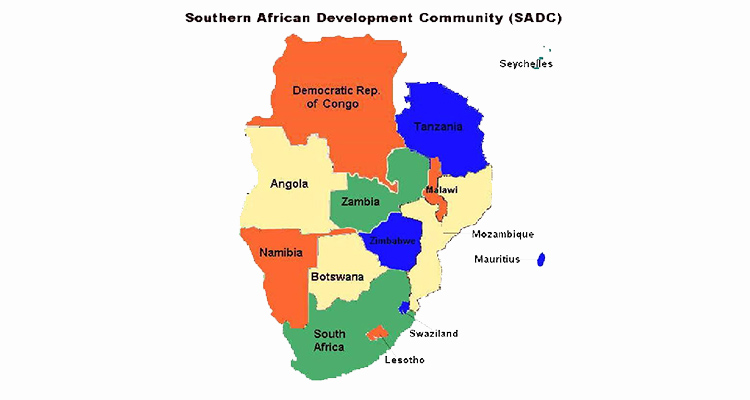
Whilst most of the SADC countries have abolished the death penalty, Botswana, Lesotho and Zimbabwe have not, leading to criminals seeing the non-death penalty countries as haven to escape to.
In an ongoing dispute, Botswana’s defence minister, Ramadeluka Seretse, has refused to give South Africa an undertaking that a Botswana citizen wrongly repatriated to face murder charges would not be hanged.
This is sequel to the deportation of a suspect, Edwin Samotse, to Botswana in August this year, contrary to South African government policy and a ministerial court order.
South Africa’s home affairs spokesperson, Mayihlome Tshwete, told said that there was no possibility that Samotse would be returned to South Africa because Botswana had its own sovereign judiciary.
He said the South African authorities were, however, preparing to make representations to the Botswana government asking for an assurance that Samotse will not be hanged.
South Africa abolished the death penalty in 1995, and Botswana, Lesotho and Zimbabwe are the only Southern African countries that retain capital punishment for ordinary crimes.
But, according to Zimbabwe’s new Constitution, those under 21 and those older than 70 at the time of their conviction cannot be executed.
Tshwete confirmed that three home affairs officials are being investigated in connection with the illegal deportation of Samotse, but would not say whether corruption was suspected.
Seretse said that, when Botswana applied for his extradition, the South Africans had asked for an assurance that Botswana would not apply the death penalty if he was found guilty, but this had not been given.
He told the Botswana Gazette last month that Samotse would not be returned to South Africa. “We cannot hand him over to the South Africans. We have no obligation to do so and he allegedly committed an offence here,” Seretse said.
“We don’t care how he got here, because he is not an illegal immigrant in Botswana.”
Samotse (26), who was deported directly from a jail in Polokwane, where he was being held on August 13 as an illegal immigrant, should first have first passed through the Lindela detention centre in Johannesburg.
He had been in South African custody for three years while his extradition was being negotiated by the two governments. He allegedly stabbed his girlfriend, Tshegofatso Kgati, to death in March 2011 in Francistown, leaving her naked body on a bed before skipping over the South African border.
May be it is Samotse’s girlfriend ghost chasing because the deportation took place despite an order by South Africa’s then minister of justice, Jeff Radebe, that he should not be extradited to Botswana after the authorities there refused to undertake not to execute him if he was convicted.
Samotse is yet to appear in Botswana’s High Court.
Meanwhile, a home affairs official has said that the department is concerned that South Africa could become a destination for people seeking to avoid the death penalty in their own countries.
The official, who asked not to be named, said that, because the fugitives could not be repatriated, the South African taxpayer would have to pay for their indefinite detention.
According to reports the South African police have arrested other illegal immigrants from other Southern African countries who had apparently crossed into South Africa to avoid execution. But he could not give their number.