

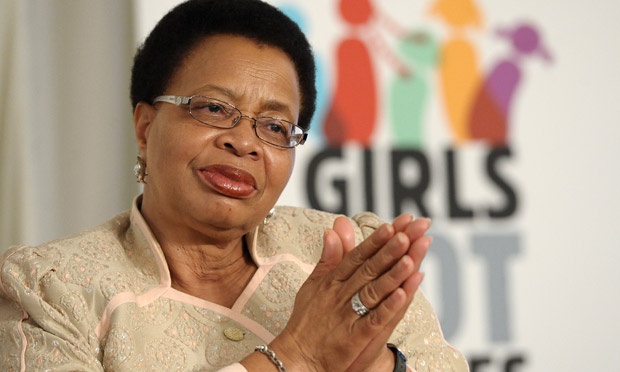
Twice widowed First Lady Graca Machel has dared the government and people of Tanzania to recall the success they achieved in the political sphere in the 60s and replicate it in the social sector more than 40 years later.
Ms Graca Machel, chairperson of the Machel Machel Trust, lauded the inspiration that Tanzania was in spearheading the African liberation movement from the time many of her fellow freedom fighters from Southern Africa arrived in the country and stayed for a long time receiving overwhelming support from the government and the people.
“We stayed here; getting support from across Tanzania from everyone. The country is wealthier in social mobilisation. So on the issue of ending child marriage, here we come again.”
Ms Machel threw the challenge at the launch of “Child Marriage-Free Zone”, the national ending child marriage campaign, in Dar es Salaam, stressing:
“We ask Tanzania to take the lead again; Tanzania has a wealth of experience on social mobilization. It’s in the DNA of Tanzanians. Tanzania is endowed with a wealth of a sense of humanity on how the people embrace and protect other human beings. This is very deeply embedded in the DNA of Tanzanias” she quipped.
“So we cannot continue with practices that do worse to children like child marriage because it’s against any human value that we stand for,” Ms Machel noted, also pointing out that traditions are human-made and not God-made, which meant that they could be changed.
“So we can change them because they are harmful to us and they make us small. We have to change the thinking that there is less value in the girl child,” she further remarked.
Ms Machel told the gathering that some of such issues were deeply embedded and needed a strategy change to prove that the arguments for such practices have no ground.
She used her testimony as having been born in a poor family but was protected by her family. “Therefore, this poverty issue cannot be an excuse for marrying off children,” she said, noting that the programme would make such regions as Mara a child marriage free zone.
Retired Union President Benjamin Mkapa said child marriage is completely unacceptable as it compromised girls from realising their full potential, adding that the girl child needs full self realisation as a fundamental right.
“We who are in charge need to have full responsibility to make them realize that. Let children continue demanding their rights; one may not have anything to do with being put down but that they certainly have no excuse for not getting out.
“At least shout out in protest and someone will hear,” he said, paying tribute to Ms Machel for championing the cause and pledged to see to it that it bears fruit.
The launch was attended by various political and religious leaders from Mara Region.
Children who have survived Female Genital Mutilation (FGM) in the region gave testimony urging parents to assist girls realize their full potential through education and not marrying them off.
On the occasion, the government pegged its hopes regarding the overhaul of the repressive 1971 Marriage Act in the envisaged new constitution.
The Permanent Secretary in the Ministry of Community Development, Gender and Children, Ms Anna Maenda, said the 1971 Marriage Act is an obstacle to the welfare of girls and a global problem that “impedes the attainment of the key Millennium Development Goals.”
The initiative aims to help Tanzania end child marriages and support child brides through the Ministry of Community Development, Gender and Children in collaboration with UNFPA Tanzania, the GMT, Children’s Dignity Forum, Tanzania Media Women Association, Mara regional authorities and CSOs in the region.
“As we look at how to overhaul the Act, we need the public to change attitude towards certain practices,” TAMWA Executive Director, Ms Valerie Msoka, said.
The campaign, which is branded ‘Child Marriage-Free Zone’ aims to strengthen national dynamics for ending child marriage and ensuring the realisation of rights of girls and women through interventions aimed at both the rights holders — that is the girls themselves and the duty bearers in Mara and nationally.