

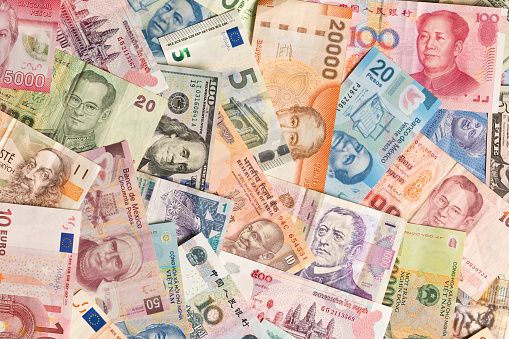
When people think about money in a country, they usually imagine one official currency used for all transactions. In reality, several countries operate with more than one currency. This situation can occur for many reasons, such as economic stability, cross-border trade, tourism, or historical developments. In some places, foreign currencies circulate freely alongside the national currency, while in others, different currencies are used in specific regions.
Here are some countries where multiple currencies are used.
1. Zimbabwe
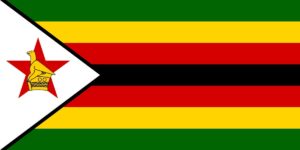
Zimbabwe is one of the most well-known examples of a country that uses several currencies. After a period of severe inflation in the late 2000s, the Zimbabwean dollar lost its value. As a result, the government permitted the use of foreign currencies for everyday transactions.
Today, people in Zimbabwe commonly use the United States dollar, the South African rand, and other currencies such as the Botswana pula. Although the Zimbabwean dollar has been reintroduced, many citizens still prefer foreign currencies because they are seen as more stable.
2. Panama
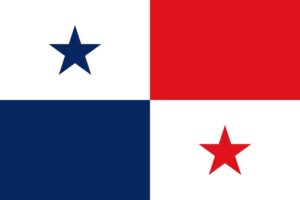
Panama has a unique monetary system. The country officially uses the Panamanian balboa, but in reality, the United States dollar is the primary currency in circulation.
The balboa exists mainly in coin form and has the same value as the United States dollar. Paper money used in Panama is mostly the United States dollar. This system has helped Panama maintain monetary stability and strengthen international trade.
3. Cambodia
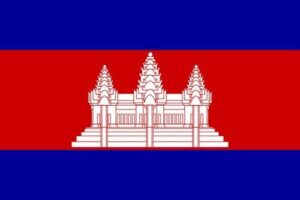
In Cambodia, both the Cambodian riel and the United States dollar are widely used. The dollar is very common in cities, hotels, and tourist areas, while the riel is more frequently used for smaller transactions.
Prices are often displayed in dollars, but change may be given in riel. This dual currency system was developed partly because of international aid and economic reforms in the country.
4. El Salvador
El Salvador officially adopted the United States dollar in 2001. However, the original national currency, the Salvadoran colón, has not completely disappeared from the financial system.
In addition to the dollar, the country has also introduced Bitcoin as a legal form of payment in recent years. This makes El Salvador one of the few countries where both traditional currency and digital currency have official recognition.
5. Cuba
Cuba historically operated with two different currencies for many years. These were the Cuban peso and the Cuban convertible peso. The convertible peso was mostly used in tourism and international transactions, while the regular peso was used by local residents.
Although the government has taken steps to unify the system, the country remains an important example of how dual currency systems can function within an economy.
Why do countries use multiple currencies?
There are several reasons why a country might allow multiple currencies to circulate. One reason is economic stability. If a national currency becomes weak or unstable, people may turn to stronger foreign currencies for security.
Another reason is trade. Countries that rely heavily on neighbouring economies sometimes accept their currencies to make business transactions easier.
Tourism can also play a role. Visitors may find it easier to spend widely recognised currencies such as the United States dollar or the euro.
While most countries operate with a single official currency, others function with two or more currencies in circulation. These systems often reflect unique economic circumstances, historical experiences, or strong international connections.