

Readings: Isaiah 50:4-7; Psalm 22; Philippians 2:6-11; Matthew 26:14-27:66
Dearly beloved in Christ, today is Palm Sunday, the beginning of this significant week called Holy Week – a week in which we reflect on the last days of our Lord Jesus Christ here on earth, His redemptive suffering and death, and His glorious Resurrection.
Holy Week is the climax of the Lenten season and arguably the highest point of the Church’s liturgical year.
The celebration of today has two significant parts:
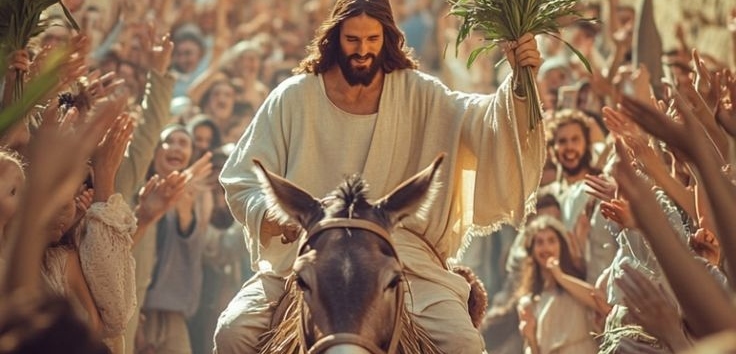
I. The commemoration of the Lord’s entrance into Jerusalem marked by the blessing of palms and procession.
II. The Mass proper, which begins with the Collect and includes the proclamation of the Passion.
The Gospel we have just heard is a long narrative of the Passion of our Lord Jesus Christ according to Matthew. It begins with the conspiracy of Judas, continues through the Passover meal, the agony in the garden, the arrest, condemnation, suffering, crucifixion, death and burial of Jesus.
In previous years, I have focused on different themes. This year, I invite us to go with Jesus to a hidden, profound and decisive place – the garden of Gethsemane.
Jesus in Gethsemane
After the Passover meal, Jesus went with His disciples to Gethsemane. He asked most of them to stay behind, while He took Peter, James and John further with Him. Then something striking happened.
The Gospel tells us that sadness and great distress came over Him, and He said: “My soul is sorrowful unto death.”
This is one of the most profound revelations of the humanity of Jesus. He was not acting. He truly felt anguish.
His sorrow was not only because of the physical suffering ahead, but also because of the weight of the sins of humanity, which He was about to take upon Himself. He was about to drink the “cup” spoken of in Scripture – the cup of suffering and divine judgment (Isaiah 51:17; Psalm 75:8; Jeremiah 25:15).
And then He prayed:
“My Father, if it be possible, let this cup pass from me; nevertheless, not as I will, but as you will.”
Here we see both the humanity and divinity of Christ. In His human will, He recoils from the suffering. Yet in perfect obedience, He surrenders to the will of the Father.
The Meaning of Gethsemane
Let us now look closely at the place where all this took place.
The word Gethsemane comes from the Hebrew Gat Shemanim, which means, “oil press.”
An oil press is a place where olives are crushed, pressed and broken so that oil may flow.
This is not accidental, it is deeply theological.
Jesus enters the place of the oil press, and there He Himself is pressed. He is crushed interiorly, He is broken in spirit.
And from that pressing flows – obedience, surrender and ultimately, salvation.
So we can say:
Gethsemane is the place where God produces oil through pressure.
The Victory Begins in Gethsemane
Before Calvary, there was Gethsemane; before the Cross, there was surrender.
The victory of Jesus did not begin on the Cross. It began when He said, “yes” in Gethsemane.
Once He surrendered to the Father’s will, the Cross could no longer defeat Him.
The Cup and the Will of God
Jesus prayed that the cup might pass. But the Father did not remove it.
Why? Because that cup was the means of our redemption. And knowing this, Jesus accepted it.
His desire was always to do the will of the Father who sent Him (John 4:34; 6:38).
There are moments in our lives when we experience our own Gethsemane: moments of sorrow, grief and uncertainty, moments of fear and inner struggle, moments when we feel overwhelmed, pressed and crushed.
Sometimes we pray: “Lord, take this away.” “Lord, stop this from happening.”
We pray for healing, for answers, for change. And yet, sometimes, after all our prayers, we still have to drink the cup. This is when we feel pressed hard like olives.
When olives are pressed, oil flows.
When we are pressed, what flows from us?
Is it anger or grace? Bitterness or prayer? Fear or surrender? Disobedience or trust?
Gethsemane does two things: It reveals what is inside us, and it transforms us.
Gethsemane is a place of accepting God’s will. Accepting God’s will is not easy, especially when it differs from what we desire, hope or expect.
Sometimes it means accepting loss, enduring suffering, receiving a “no” when we expected a “yes”, carrying burdens no one sees.
Some cups are painful, yet necessary.
And like Jesus, we are invited not just to endure them, but also to surrender to God through them. This is where transformation happens.
It is easy to shout Hosanna, but it is difficult to say not my will. Palm Sunday calls us to move from celebration to surrender.
If we allow God to meet us in our Gethsemane, our pressing will produce oil, our crushing will release grace, and our surrender will become victory
So today, we bring our cup before God and say with Jesus:
“My Father… not as I will, but as you will.”
Sermon preached by Fr Emmanuel Baraka-Gukena Okami on March 29, 2026