

The never-expect-power-always syndrome that has bedeviled Nigeria for decades, has finally found a new foothold in South Africa, hitherto a republic 24-7 blazing light, with its pliers and blackout gear.
On December 5, Eskom implemented stage three blackouts, but on December 8 Eskom CEO Tshediso Matona denied that Eskom was in crisis.
However ESKOM was able to improve supply on January 9 2015 when it implemented stage-1 of load shedding , due to high electricity demand and the unavailability of some of its generating units.
In Mandela’s beloved country, Stage one allows for up to 1000MW of the national load to be shed, stage two for up to 2000MW, and stage three for up to 4000MW.
Matona says government shared responsibility with ESKOM for the power problems gripping the country and said the country’s power supply would remain severely constrained in the coming months while ESKOM dealt with its maintenance backlog.
He said maintenance had been neglected in recent years and at times was deferred to keep the lights on. This month about 900 megawatts would be taken off the grid when one of Koeberg nuclear power station’s units would be under maintenance.
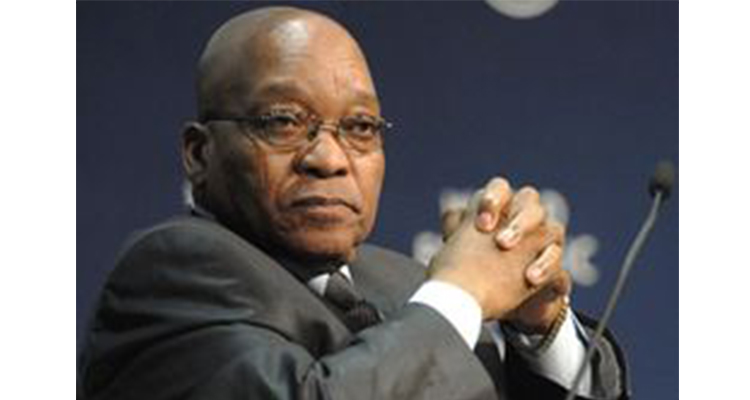
South African President Jacob Zuma broached the issue power shortages in his address to the World Economic Forum in Davos, Switzerland, enplaning that the electricity infrastructure for example, was never designed to serve an expanded citizenry.
“This extension of electricity to more households that had been excluded in the past, coupled with a growing economy, have sharply put pressure on the infrastructure, which needs improved maintenance and expansion.”
Zuma said South Africa was currently considering options to increase the available electricity generation capacity and to manage the demand over the next six months in order to reduce the risk of rolling blackouts.
Zuma said South Africa would build on the success of the renewable energy procurement programme to ensure that the country had a “reliable, flexible, clean and cost-competitive electricity generation mix”.
“Apart from the ESKOM new build programme at Medupi, Kusile and Ingula, the government has procured 4000 megawatts from the Independent Power Producers. To date 923.18 megawatts have been connected to the national grid.”
He said the two bid windows of the renewable energy procurement process attracted more than R82 billion from private investors, with window three expected to draw R51bn at financial close.
“South Africa is also the last frontier country for petroleum development, including off-shore oil and gas as well as shale gas prospects,” he said.
“We are also exploring nuclear and coal as part of the energy mix. We are optimistic that the end result of the current challenges will be much improved energy resources for the country.