

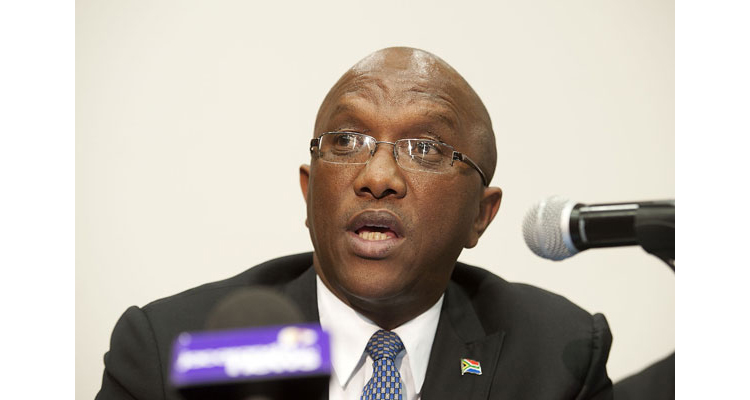
The Auditor-General of South Africa, Kimi Makwetu has called on government ministers and directors-general of departments to take punitive steps against the technocrats who have been defrauding the tax payer of billions of Rands annually.
The call was contained in the Auditor-General’s report for the 2013/2014 financial year which was laid before Parliament Friday which revealed that spending of public funds by civil servants outside laid down regulations has risen from R27 billion last year to more than R62 billion in March this year.
The report shows that 72% (or 469) of government departments as a well as public entities were not complying with laws that govern the spending of taxpayers’ money such as the Public Finance Management Act.
Makwetu said it was worrying that a huge number (309) of these departments and entities were responsible for the staggering R62.7-billion irregular expenditure. He said 47% of the irregular expenditure (or R29-billion) stemmed from previous years but was only uncovered for the first time this year.
The A-G said that culprits for the reckless spending were provincial departments of health, education, roads and public works, which were at the coalface of service delivery.
He fingered Limpopo, KwaZulu-Natal, Gauteng and Eastern Cape as serial offenders, with the four being responsible for irregular expenditure to the tune of more than R10-billion, with the embattled department of transport and Sanral accounting for over R3-billion.
The irregular expenditure was mostly related to the flouting of procurement processes.
Makwetu said the government needed to recruit skilled and qualified financial managers to contain the problem. “The many departments that are about impacting the services that are delivered, are the ones that are failing the audit tests, they are the ones that have to deal with a lot of logistical detail in delivery of services that they do.”
ANC MP Cedric Frolic, who is the house chairman of committees in the National Assembly, said parliament’s oversight committee needed to start ensuring that offending civil servants are held to account, including public shaming.
“Who are these people that are responsible for this? and unless we start naming them because they also have a habit, you find that a certain official who’s messed up in a certain department, as soon as action is taken they disappear, only to surface later in another department, where the same [thing]would be committed,” Frolic said.