

Readings: Ezekiel 18:25-28; Psalm 24; Philippians 2:1-11; Matthew 21:28-32
Grace and peace to you, dear family of God’s people. Today is the Twenty-Sixth Sunday in Ordinary Time, Year A.
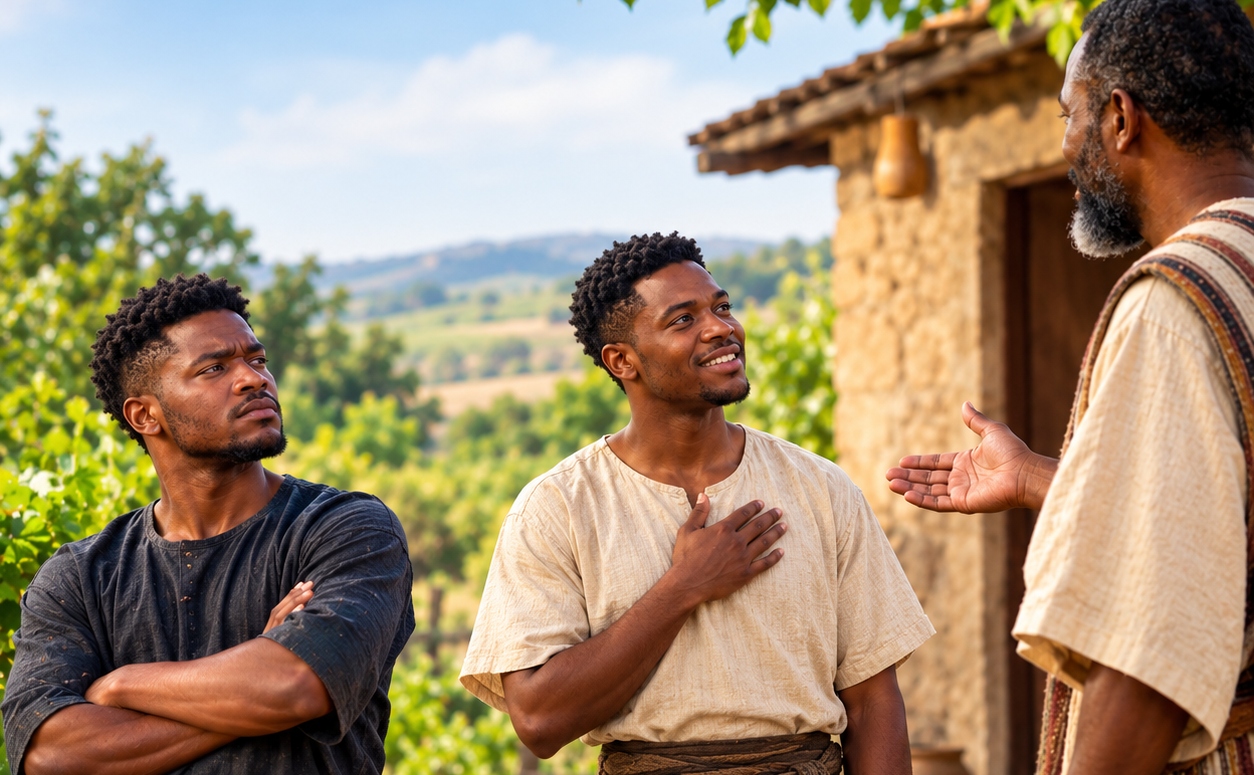
The Gospel today is known as the Parable of the Two Sons. A father asks his first son to go and work in his vineyard. The son responds very rudely and disrespectfully – perhaps in a way some teenagers might speak to their parents today: “I will not go.” Later, however, he thinks better of it, repents, changes his mind and goes.
The second son speaks respectfully to his father. He says, “Certainly, sir,” but he does not go. His words are good, but his actions do not follow them.
Jesus asks: “Which of the two did the father’s will?” The answer is obvious: the first son, because although he began badly, he eventually obeyed.
This parable was addressed directly to the chief priests and elders of Jerusalem. They considered themselves obedient people of God; they had said “yes” to God through their knowledge of the Law and their religious position. Yet, when John the Baptist and Jesus came with God’s message, they refused to listen, repent and believe.
Meanwhile, the tax collectors and prostitutes – those whom society and religious people looked down upon as sinners – listened to John’s call. They repented and changed their lives. Jesus says that these were entering the Kingdom of God before the religious leaders, because they received God’s mercy and responded to His call.
What, then, does this Gospel say to us today?
MESSAGE ONE: GOD IS INTERESTED IN WHO WE ARE NOW
When we connect this Gospel with the First Reading from Ezekiel, we receive a powerful message. God tells us that if a righteous person turns away from righteousness and does evil, that person will die because of the evil committed. But if a wicked person turns away from wickedness and does what is lawful and right, that person will live.
God is telling us that our present spiritual state matters greatly. We must not rest only on the goodness of our past.
Many people say: “I used to be prayerful. I used to go to Mass regularly. I used to be active in the Church. I used to be kind, innocent, generous, faithful, holy and committed.”
But the important question is: Why have you stopped?
The zeal, love, integrity and uprightness of yesterday cannot replace our need to walk with God today. We must never backslide in our love for God, our good resolutions, our moral life and our service in the Church. As the Letter to the Hebrews says, “We are not of those who shrink back and are destroyed, but of those who have faith and preserve their souls” (Hebrews 10:39). Jesus also says: “The one who perseveres to the end will be saved” (Matthew 24:13).
It is not merely how we began. It is how we are living now, and whether we continue faithfully until the end.
On the other hand, there are people who remain imprisoned by their past. They keep remembering who they were and what they have done. The devil keeps harassing them with old sins, mistakes and failures.
But the Gospel gives us hope. God accepts genuine repentance. He forgives and gives a new beginning. He says: “I, I am He who blots out your transgressions for my own sake, and I will not remember your sins” (Isaiah 43:25).
The tax collectors and sinners who repented were not merely tolerated by God. They were forgiven, restored, sanctified and justified. This is the power of mercy and grace. Your past may explain you, but it does not have to define your future.
MESSAGE TWO: THE POWER OF A CHANGED MIND
Let us now consider the first son. He was rude, firm and determined not to go. Perhaps he had reasons, but later he thought better of it. He repented, changed his mind and did what his father asked.
Repentance is more than feeling sorry for what we have said or done. It is a real change of heart that leads to a change of action.
True repentance is not merely crying over sin, feeling ashamed, or making promises in an emotional moment. True repentance changes direction. It says: “I have been living wrongly, but by God’s grace, I will now walk differently.”
Ezekiel makes this very clear: if the wicked person turns away from wickedness and does what is right, that person will live.
Dear friends, is there a decision we have made that God is calling us to re-examine?
Is there something we have vowed never to do, but which God is now inviting us to reconsider?
Is there a sin, resentment, relationship or way of life from which God is calling us to turn away?
Perhaps there are people we have said we will never help, forgive or speak to again.
Perhaps we left a spiritual group in anger and bitterness.
Perhaps we abandoned an important responsibility because of discouragement.
Perhaps we have sworn vengeance. Perhaps we have closed our hearts to someone who wounded us.
The Lord may be asking us today to think again. To stop suppressing that quiet voice within us which says, “This is not what God wants of you.”
MESSAGE THREE: WHAT ABOUT OUR PROMISES?
The second son said the right thing, but failed to do it. His problem was not bad speech; it was empty speech.
There may be areas in which we have said “yes” to God, but our lives are saying “no.” There may be promises we have made to the Lord that we are no longer taking seriously. We may have promised to pray more, to return to confession, to stop a particular sin, to forgive someone, to serve in the Church, to be faithful in marriage, or to take better care of our family.
We may also have made promises to people – our spouse, children, parents, friends or parish community – which we have not honoured.
God is saying to us today: let your words never be finer than your deeds. Let your “yes” be sincere.
St. Paul gives us the perfect example: Jesus Christ. He did not simply say “yes” to the Father with His lips. He emptied Himself, took the form of a servant and became obedient unto death, even death on a Cross. His obedience was costly, but it brought salvation to the world.
MESSAGE FOUR: GOD IS STILL CALLING US INTO HIS VINEYARD
God is still asking each of us: “My child, go and work in my vineyard today.”
To work in God’s vineyard is not only to become a priest, deacon or religious. It is to labour for the growth of God’s Kingdom. It is to plant, harvest, weed, support, sow and take an active part in the mission of the Church.
For some, this means dedicating more time to prayer. For others, it is returning to Confession, becoming an adorer of Jesus in the Blessed Sacrament, praying for the souls in Purgatory, or becoming a Pioneer – abstaining from intoxicating drink for the conversion of excessive drinkers.
For some, it is spreading devotion to Our Blessed Mother, using their gifts in the parish, defending truth, speaking against unjust laws and practices, caring faithfully for their family, serving the poor, forgiving those who have hurt them, abandoning sin, and taking their faith seriously.
The Father’s invitation is personal. He is calling each one of us. The question is not only, “What have I said to God?” The real question is: “What am I doing with what God has asked of me?”
Let us ask the Lord today for the grace not to give Him only beautiful words, but an obedient heart and a faithful life.
Let us pray:
Lord Jesus Christ,
you were obedient to the Father
even unto death on the Cross.
Forgive us for the times we have spoken well but failed to do your will.
Give us the grace to repent sincerely,
to turn away from sin, to honour our promises, and to work faithfully in your vineyard.
Where we have become discouraged, renew us. Where we have hardened our hearts, soften us. Where we have said “no” to you,
give us the humility and courage to change.
Amen.
Sermon preached by Fr Emmanuel Baraka-Gukena Okami on September 27, 2026