

There was a time when you did not need a smartphone, television or expensive toys to have fun. All you needed was a few friends, a vivid imagination and enough space to turn an ordinary afternoon into an entirely different world.
As children, we were masters of role-playing.
One minute, you were sitting in front of your house with your friends. The next, you were a teacher, doctor, banker, mother, father, business owner or even a celebrity. Somehow, we took these roles very seriously.
- Playing school
Perhaps one of the most popular games was playing school.
One child would automatically become the teacher, usually because they had the best handwriting or simply because they were the bossiest. Another would become the class prefect, while the rest of us became students.
There would be a board, real or imaginary, a piece of chalk and plenty of shouting.
“Keep quiet!”
“Open your books!”
“Who is making noise?”
We had no idea that we were already practising leadership, communication and organisation. At the time, we were simply having fun.
- Playing house
Then there was playing house.
A few chairs could become a living room. A corner of the compound could become a kitchen. Leaves, stones and bottle tops could become food, plates and cooking utensils.
Someone would be the mummy, another the daddy, and someone else would inevitably become the troublesome child.
We copied what we saw adults doing. We cooked imaginary meals, went to imaginary markets, looked after imaginary children and sometimes even had imaginary arguments.
Looking back, it was fascinating how much we learned simply by observing the adults around us.
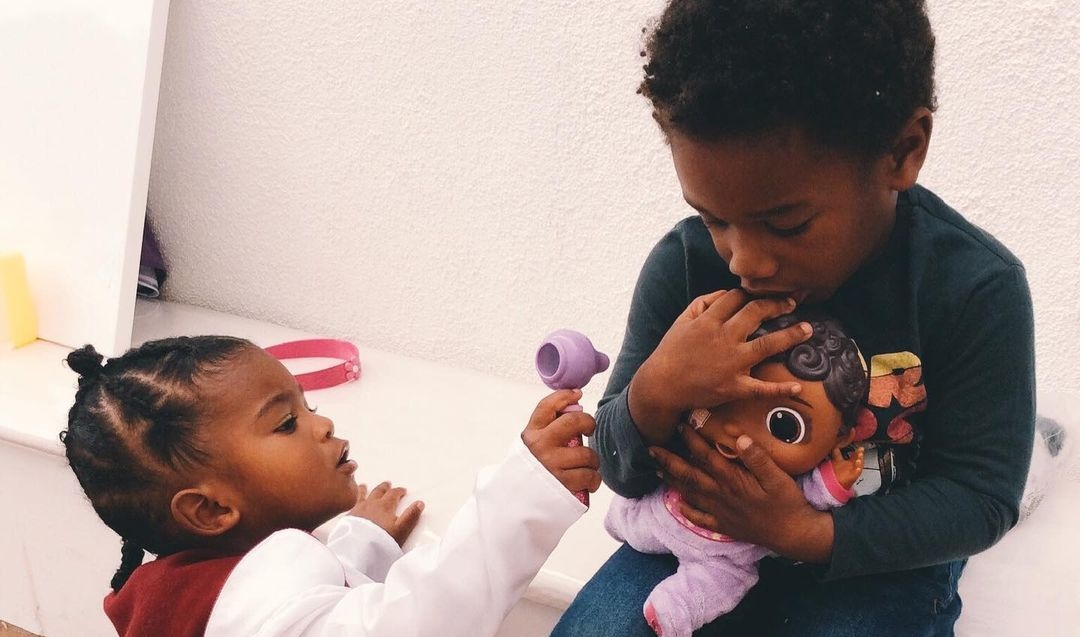
- Playing doctor
Every childhood group seemed to have someone who wanted to be a doctor.
A small bag became a medical kit. A toy or an old household item became a stethoscope. Someone would lie down and announce that they were sick.
“Where does it hurt?”
“What did you eat?”
“Take this medicine.”
The treatment was usually completely imaginary, but we played our roles with such confidence that you would think we were running an actual hospital.
- Playing shop
The shopkeeper game was another favourite.
We would gather biscuits, sweets, empty containers, bottle tops and anything else that could pass for merchandise. One person became the seller while everyone else became customers.
There was buying, selling, bargaining and sometimes even credit.
“Madam, I will pay you tomorrow.”
Of course, tomorrow could come and go without payment because none of us understood debt collection yet.
- Playing family and neighbours
Sometimes, our games became full communities.
We had families, neighbours, teachers, policemen, traders and sometimes even pastors. Everyone had a role, and everyone had a responsibility.
The interesting thing was that nobody needed to explain the rules. We simply created them as we went along.
If someone did not like their role, they could negotiate for another one. If the story became boring, we changed it. If someone went home, we simply created a new character.
Our imagination had no limits.
What makes these memories special is that we were not just pretending. We were creating.
We were learning how to communicate, negotiate, solve problems and work with others. We were experimenting with different personalities and imagining what it might be like to become the adults we saw around us.
And the best part?
We did not need instructions.
A cardboard box could become a car. A bedsheet could become a tent. A stick could become a microphone. The compound could become a hospital, school, market or entire neighbourhood.
Today, children have access to technology and countless forms of entertainment. But there was something wonderfully simple about the games we played.
We could turn almost anything into something.