

Across the world, the length of time a president remains in office often reflects far more than personal popularity. It can reveal the strength or weakness of democratic institutions, the role of constitutional limits, and the political culture of a nation. While some leaders secure repeated mandates through elections, others extend their rule through constitutional changes, contested votes, or outright authoritarian control.
What defines a “Long-serving” president?
In most democratic systems, presidential tenure is limited by the constitution, typically ranging from four to six years per term, often with a cap of two terms. A “long-serving” president, therefore, is one who either:
- Remains in power beyond the typical term limits, or
- Governs for an unusually extended period, often exceeding a decade
The mechanisms that enable this longevity vary significantly from country to country.
Africa: Longevity and Power Consolidation
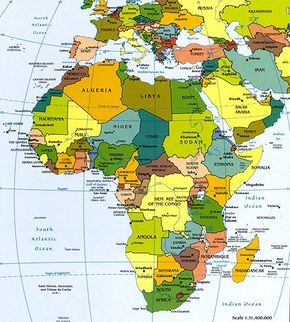
Africa has witnessed some of the longest-serving presidents in modern history.
- Teodoro Obiang Nguema Mbasogo of Equatorial Guinea has been in power since 1979, making him one of the world’s longest-serving heads of state. His rule has often been described as highly centralised.
- Paul Biya of Cameroon has led since 1982. Despite periodic elections, his tenure has drawn criticism over electoral transparency and governance.
- Yoweri Museveni has ruled Uganda since 1986. Constitutional amendments removed age and term limits, allowing him to extend his presidency.
In many of these cases, long tenures are linked to constitutional revisions, strong control over political institutions, and limited opposition space.
Why do some presidents stay so long?
Several factors contribute to extended presidencies:
- Constitutional amendments: Leaders alter term limits or reset term counts
- Control of institutions: Influence over courts, electoral bodies, and legislatures
- Weak opposition: Fragmented or suppressed political opposition
- Security narratives: Leaders justify extended rule by citing stability or national security
- Economic influence: Control over resources strengthens political dominance