

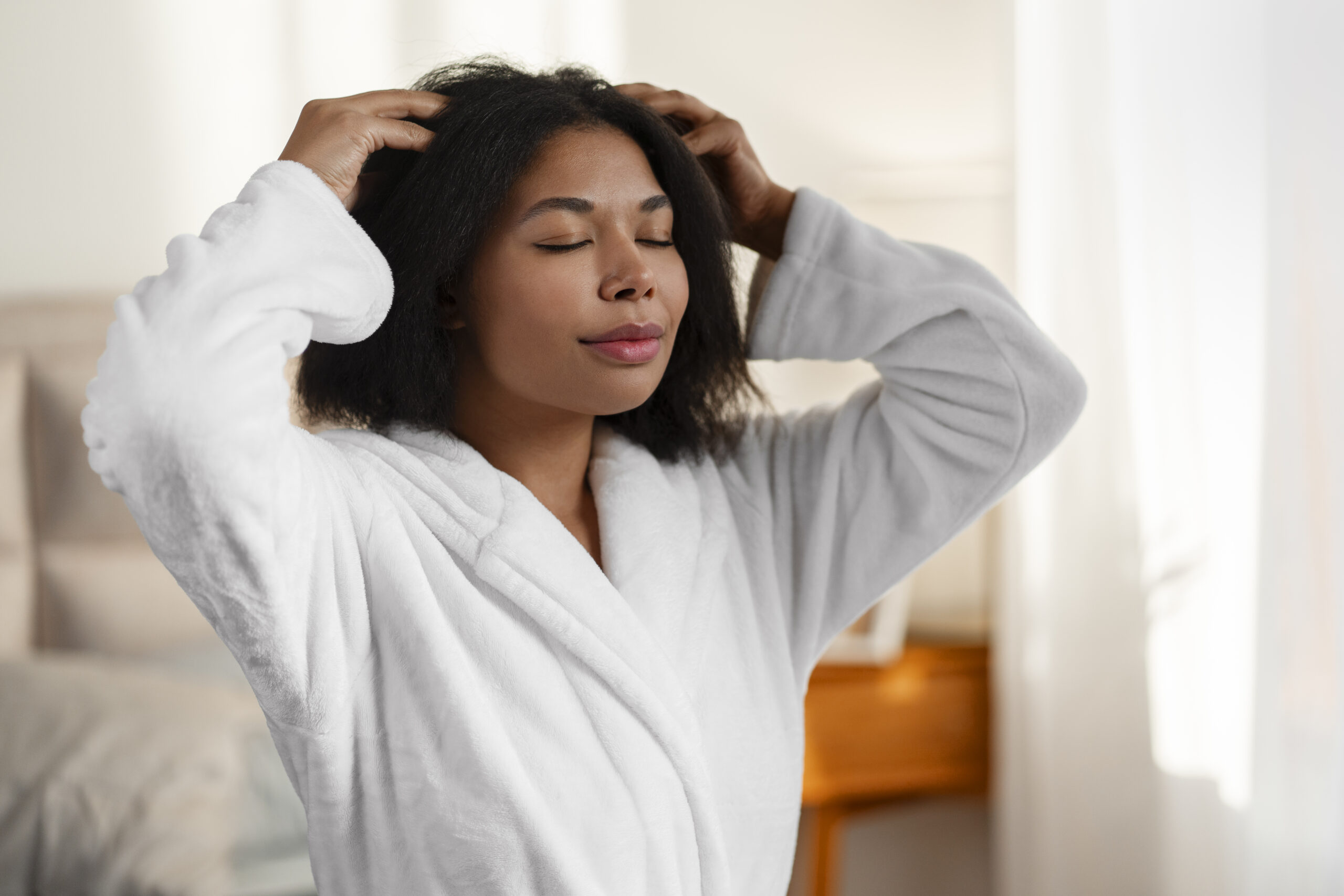
When it comes to hair care, many people pay more attention to the length, colour, texture and appearance of their hair while forgetting the skin underneath it. However, a healthy head of hair begins with a healthy scalp. Just as the skin on your face needs regular care, your scalp also requires attention to remain clean, comfortable and healthy.
Neglecting your scalp can lead to problems such as dandruff, itching, dryness, excessive oil production, and product buildup. Whether you wear your hair natural, relaxed, in braids, locs, or wigs, developing a proper scalp care routine can make a difference.
Here are some practical ways to care for your scalp.
1. Wash your scalp regularly
One of the simplest ways to maintain a healthy scalp is to wash it regularly. Sweat, dirt, excess oil and hair products can accumulate on the scalp, causing irritation and discomfort.
Use a shampoo that suits your hair type and scalp condition. Massage it gently into your scalp with your fingertips rather than scratching with your nails. Rinse thoroughly to ensure that no shampoo remains behind.
How often you wash your hair depends on your scalp, lifestyle and hair type. If you sweat frequently or have an oily scalp, you may need to wash more often.
2. Avoid excessive use of hair products
Hair oils, gels, creams, sprays and styling products can help you achieve your desired look. However, using too many products can cause buildup on your scalp.
When products accumulate, they may contribute to itching, irritation and flakes. Avoid applying large quantities of products directly to your scalp, especially if they are not designed for that purpose.
Keep your hair care routine simple and wash out products when necessary.
3. Moisturise your scalp when necessary
A dry scalp can feel uncomfortable and may cause itching, tightness and flaking. If your scalp is dry, consider using a lightweight moisturising product formulated for the scalp.
However, remember that a dry scalp and dandruff are not the same thing. Applying more oil does not necessarily solve dandruff and may make certain scalp conditions worse.
Choose products according to your scalp’s needs rather than assuming that every scalp requires additional oil.
4. Be careful with protective hairstyles
Braids, cornrows, twists, wigs and locs are popular hairstyles, particularly because they can reduce the amount of daily styling required. Nevertheless, protective hairstyles should not become a source of damage.
Avoid hairstyles that pull too tightly around your hairline or cause pain and headaches. Excessive tension can damage hair follicles and contribute to traction alopecia, a form of hair loss.
Ensure that your scalp can be cleaned properly while wearing protective styles. Also, give your hair and scalp a break between hairstyles.
5. Do not scratch your scalp
It can be tempting to scratch your head whenever you experience itching. However, scratching aggressively can injure the scalp, cause inflammation and increase the risk of infection.
Instead, investigate what may be irritating. It could be dryness, dandruff, an allergic reaction to a hair product or another scalp condition.
If the itching persists, seek advice from a dermatologist rather than repeatedly scratching your scalp.
6. Keep your combs, brushes and hair accessories clean
Your hair care tools also require regular cleaning. Combs, brushes, wig caps, scarves and other accessories can collect oil, dirt, dead skin cells and product residue.
Wash your combs and brushes regularly and allow them to dry properly before using them again. Avoid sharing personal hair care tools, particularly if someone has a scalp infection.
Keeping these accessories clean helps maintain good scalp hygiene.
7. Protect your scalp from excessive sun exposure
The scalp can also suffer from sun damage, particularly when the hair is thin, parted or naturally sparse.
When spending extended periods outdoors, protect exposed areas of your scalp with a hat or suitable sun protection product. Pay particular attention to your hairline and the crown of your head.
Sun protection is especially important for people with thinning hair or bald patches.
8. Eat a balanced diet and drink enough water
Good nutrition plays an important role in maintaining healthy skin and hair. Your scalp benefits from a balanced diet containing protein, vitamins, minerals and healthy fats.
Include foods such as eggs, fish, beans, vegetables, fruits, nuts and whole grains in your meals. These provide nutrients that support normal skin and hair health.
Drink enough water throughout the day to support your body’s hydration needs. Although drinking water alone will not cure scalp problems, maintaining good hydration is part of overall health.
9. Avoid very hot water
Washing your hair with excessively hot water can strip the scalp of its natural oils and leave it feeling dry or irritated.
Use lukewarm water when washing your hair and rinse thoroughly. Also, avoid using very hot hair dryers close to your scalp, as excessive heat can cause discomfort and irritation.
10. Pay attention to changes in your scalp
Your scalp can give you clues about your overall hair and skin health. Persistent itching, unusual flaking, redness, sores, swelling, painful bumps and sudden hair loss should not be ignored.
Dandruff may require an anti-dandruff shampoo containing ingredients such as ketoconazole, selenium sulphide or zinc pyrithione, depending on the product and its availability.
If symptoms persist despite using appropriate products, visit a dermatologist for proper diagnosis and treatment. Avoid experimenting with several treatments at once, as this may worsen irritation.
Whatever your hairstyle or hair texture, do not focus so much on the hair that you forget the scalp beneath it. After all, beautiful hair care begins at the roots.