

Building a successful career takes more than hard work. It requires self-belief, the courage to pursue new opportunities, the ability to communicate one’s value and the wisdom to navigate challenges along the way. For women, particularly those working in spaces where they are underrepresented, the journey can come with additional pressures that are not always recognised.
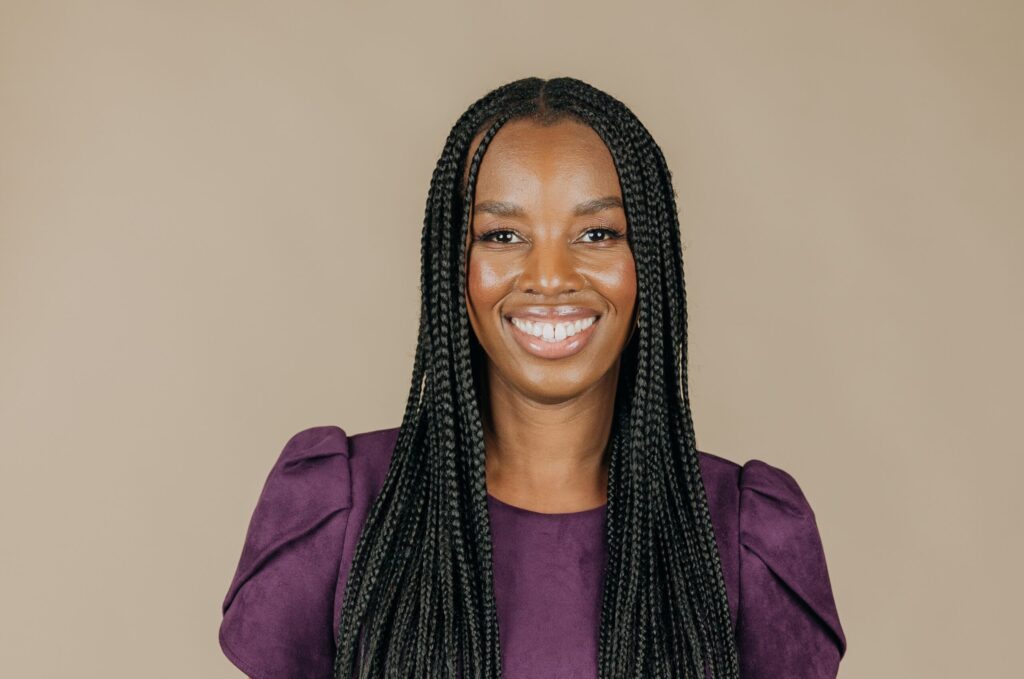
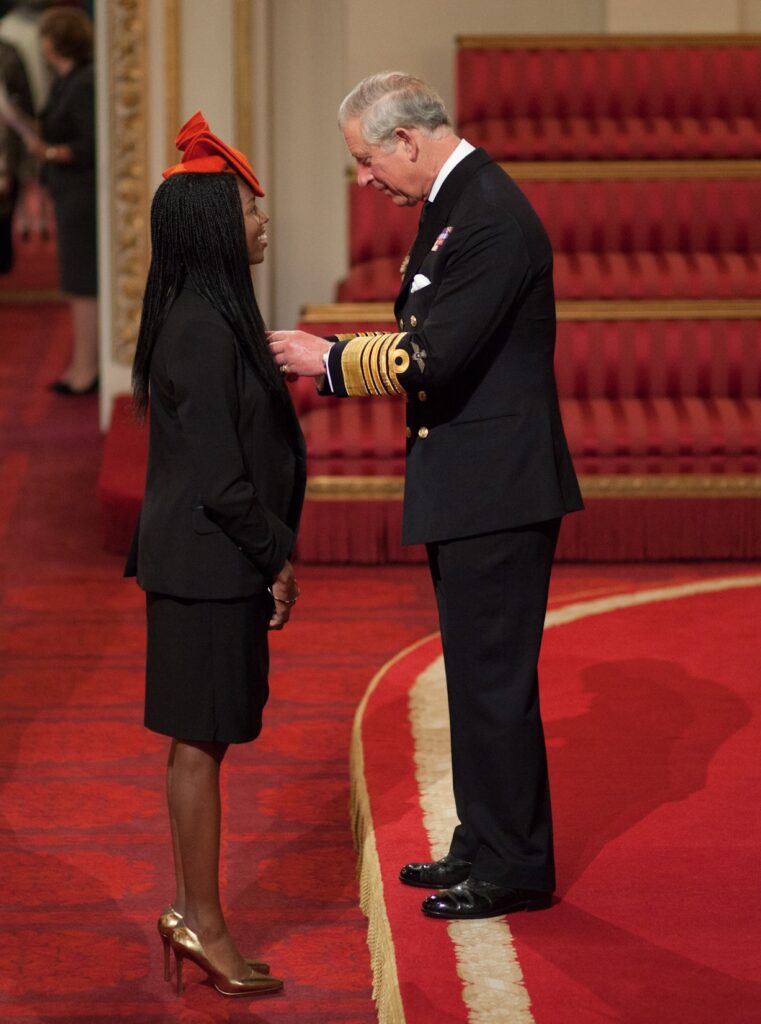
Our Woman of the Month, Octavia Goredema MBE, understands these challenges and has dedicated her career to helping professionals discover their potential and thrive in the workplace. An accomplished author, executive coach and former communications professional, she has worked with thousands of professionals, including leaders at Fortune 500 companies, supporting them to navigate career transitions, build their professional reputations and take meaningful steps towards their ambitions.
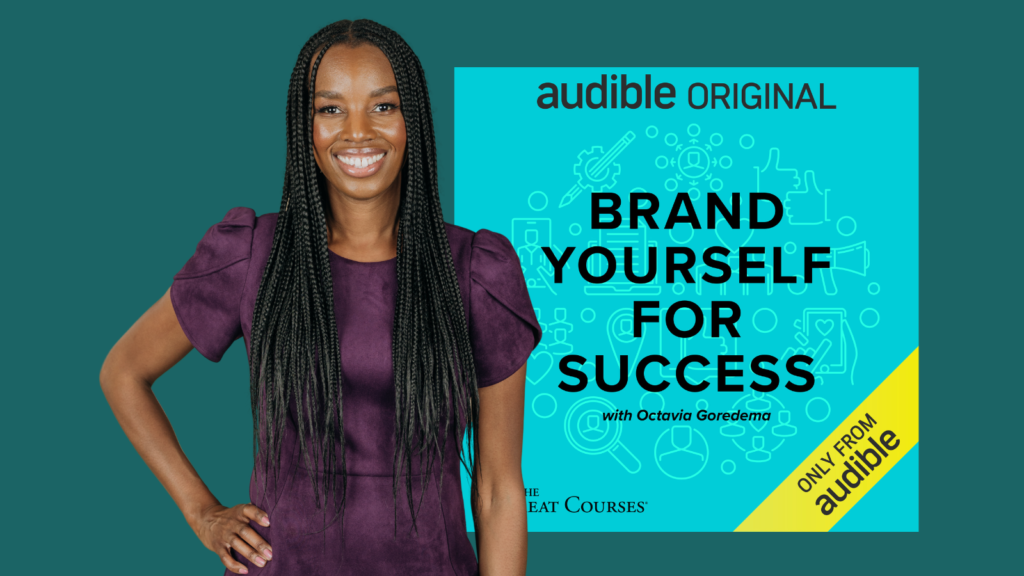
Her book, Prep, Push, Pivot, offers practical guidance for underrepresented women navigating the workplace, from pursuing new opportunities and asking for promotions to finding mentors and overcoming career setbacks. She has also created an Audible Original series on career transitions and personal branding, extending her insights to professionals seeking to take charge of their career journeys.
Drawing on her experience working in London and the United States, Goredema speaks candidly about the realities of being the only Black woman in professional spaces, the importance of recognising one’s worth, and the need for organisations to create fairer environments where talent and contributions are recognised.
In this interview with Pride Magazine Nigeria, she discusses the evolving world of work, self-advocacy, mentorship, personal branding and building an international career. She also shares practical advice for women who want to move forward professionally without losing sight of their value.
- You have built a successful career helping people reach their full potential at work and in life. What originally inspired you to focus on this?
I became an author and a coach because I am endlessly curious about what it takes not just to do our best work, but also what happens behind the scenes to make that possible. I absolutely love seeing other people discover that formula.
I am always motivated and inspired by witnessing people do their best work. Sometimes that work is visible to others, and sometimes it only becomes visible after the hardest parts have been completed.
No one else knows how your career feels, but it is the single most important investment you will make.
Throughout my professional career in communications, I have loved having the opportunity to mentor others and build teams. Now, in my work as a coach and author, I enjoy supporting teams around the world to get the best out of their people. It is endlessly rewarding, and I feel very blessed to have the opportunity to do this work. It is all endlessly fascinating to me.
- You have worked with thousands of professionals, including leaders at Fortune 500 companies. What are some of the biggest career challenges you see professionals struggling with today?
Right now, it feels as though almost everyone is trying to figure out what the future of work will look like as AI becomes more advanced and prevalent.
These are monumental shifts, and many people do not have immediate answers. The career playbooks people assumed they needed to follow are suddenly being upended and rewritten in real time.
This is really difficult, not just for people at the beginning or middle of their careers, but also for leaders trying to navigate these changes.
Layoffs are happening across a range of industries, and AI is not just eliminating roles; it is also shifting responsibilities. This is changing not only how we work, but also what it means to navigate the next steps of our careers.
That is a huge adjustment. It affects not just where you work, but how you work, the dynamics within your team and your relationships with the people you report to.
When you add in what we experienced during COVID, I think this decade has been tumultuous in so many ways. I am fairly certain we will look back on the past five or six years and be amazed by how much change we have collectively had to embrace and how profoundly it has affected our work and the way we work.
- Your book Prep, Push, Pivot focuses on essential career strategies for underrepresented women. What prompted you to write the book, and what did you most want women to take away from it?
Writing this book really was a full-circle moment for me. As a child, my dream was to become an author. However, when I embarked on my career in London, working in public relations, I put that dream completely to one side and focused on channelling my writing into my professional life. I was writing on behalf of clients, companies and organisations, but never for myself.
The irony is that all those work experiences culminated in making me the author I eventually became, although I did not know that at the time.
My book, Prep, Push, Pivot, focuses on navigating the workplace. I started my career in London before moving to the United States. Over the years, while working in global companies on industry-leading initiatives, programmes and collaborations, there were many occasions when I was the only Black woman in a meeting, sometimes the only Black woman on a team, and often the only Black woman in the building.
There is a level of intensity and intentionality that goes into navigating spaces where you are the only one, or one of very few. At first, I assumed that was simply how things were. It took me many years to realise that there is an additional weight that comes with those experiences, one that is not necessarily recognised in the moment.
Essentially, I wanted to write the book I wished I had at pivotal moments in my own career. After transitioning into executive coaching and supporting the career development of other professionals, I also wanted to capture the questions, concerns and challenges my clients and the people I worked with one-on-one were sharing with me.
My goal was to create an accessible resource that women could turn to at pivotal moments in their careers. Whether you are looking for your next opportunity, asking for a promotion, recovering from losing a role, identifying mentors who can support you, or navigating caregiving while growing your career, these are all things we often have to figure out step by step.
I wanted to share not just my own experiences, but also those of other professional women I have supported as they navigated their next steps and found their way through career obstacles.
- Many women are doing excellent work but struggle to advocate for themselves. Why do you think self-advocacy remains difficult for so many women, and how can they become more comfortable owning their achievements?
This is so true, and I think it starts young. I remember being told when I was small that I would have to work twice as hard, and I feel many women carry that expectation. At the same time, we are working hard within unequal systems.
This is one of the key reasons my core philosophy centres on recognising your worth and knowing your value, especially when it is not being reflected back at you.
At the end of every week, I send out an email newsletter that reminds my readers to remember what they have achieved. It is so important, especially during difficult periods when it feels as though nothing is working or we are not moving forward.
Often, we are more capable and impactful than we realise. It is important to remember that and share it.
- For a woman who feels overlooked at work despite consistently delivering results, what practical steps would you advise her to take, and what needs to change more broadly in organisations?
I hear this so often from the professionals I coach. They are working incredibly hard and delivering results, but they are unsure what they need to do to open the next door in their careers.
Sometimes, we are blessed with a fantastic manager who is deeply invested in our professional development. Such a person amplifies our work, introduces us to decision-makers, and helps us understand what it takes to advance. However, that is not everyone’s experience.
My advice is to start by recognising that your work matters and learning how to communicate its impact with confidence.
Begin by building rapport with your manager. Highlight a meaningful result you have achieved, ideally one you can quantify. Clearly communicate your aspiration, whether it is a promotion or a new responsibility. Explain the value you could bring to that next role, and then ask your manager for their perspective on what needs to happen next.
One thing I always emphasise is that this is a business conversation. It is not a reflection of your worth as an individual.
There may be organisational factors outside your control, including budgets, restructuring and the availability of opportunities. However, you can control how you communicate your achievements and ambitions.
Organisations also need to do their part. We cannot expect women to shoulder the entire responsibility for being recognised. Leaders need to create environments where contributions are visible, expectations for advancement are clear and opportunities are not dependent solely on who feels most comfortable speaking up.
- Career changes can be both exciting and frightening. From your experience coaching professionals, how can someone determine whether it is time to change careers or simply time to make a change within their current job or path?
Many of us reach a point in our lives when we crave greater meaning and satisfaction from our careers. That feeling can be almost impossible to ignore. However, the fear of switching gears and starting over can make the prospect of a career pivot terrifying.
I created my Audible Original series, How to Change Careers with Octavia Goredema, because I know what it feels like to lie awake at night wondering what to do next and whether you should take a leap.
If you are unsure whether it is time to change careers completely or explore new opportunities within your current field, I encourage you to start with some small experiments.
One option is to keep your existing career while testing aspects of your prospective new career in your spare time. Another is to prepare for a gradual shift by looking for opportunities to move into a different career path over time within your current company.
Many career transitions are gradual, so do not feel pressured to make a quick decision if you are still considering your options. Talk to as many people as possible about the things you are curious about, and start carrying out small experiments to see whether that type of work feels right for you.
- You have also written about personal branding. How important is it to intentionally build and communicate your professional reputation, and how can one build a great personal brand?
There is one thing I know for sure. Your career is the most personal and valuable investment you will ever make. If you want to invest fully in your career, you need to be proactive about branding yourself for success at every stage by authentically sharing what you do well. That realisation led me to create my Audible Original series, Brand Yourself for Success.
If you want to advance, this is non negotiable. However, I know it can feel daunting. People often hear the phrase ‘personal brand’ and freeze or recoil, but in truth, it is about being intentional in sharing what you do, your achievements, your skills and what you are working towards.
That intentionality builds your reputation and opens doors that can accelerate your career in the future.
I have spent many years working as a career coach, and through that work, I have witnessed countless pivotal moments for professionals who took the leap to create a personal website, rewrite their biographies or agree to deliver a presentation about their work.
These actions not only strengthen your reputation, but can also lead to exciting opportunities, including new connections, assignments and roles.
In my own experience, I once agreed to a podcast interview. After the interview ended, I asked the host some questions because I wanted to learn more about his work. We chatted for another half an hour or so.
About a week later, he attended a conference and recommended my work while speaking with a group of people. That recommendation led to a message on LinkedIn asking whether I would be available to deliver a workshop for Oprah Winfrey’s Charitable Foundation. Of course, I said yes, and that led to me meeting Ms Winfrey.
I could never have imagined what would happen when I agreed to that one podcast interview. It is so important to remember that the ripple effects of sharing your work can be immense.
- What role has mentorship played in your own journey, and what should one look for in a mentor beyond having someone with an impressive title?
We all know the value of networking when it comes to building a career. However, many of us eventually reach a point where we feel we have hit a ceiling. Having friends at work is great, and having a manager you work well with is wonderful, but having someone who will champion your work is in an entirely different league.
I think it is important to gravitate towards people who believe in paying it forward, regardless of their seniority. This could mean taking the time to share an insight, offer an idea or make a connection.
However, remember that it works both ways. I sometimes observe professionals who are eager to find a mentor but have not served as mentors themselves. Even if you are striving towards the next step in your career, there is always someone looking at where you are now who would love to have that opportunity. Do not just seek support; be ready to give it.
Paying it forward matters. Sometimes, the smallest interaction can pave the way for a career-changing opportunity.
At numerous points over the past two decades, thanks to the actions and support of others, I have been recommended for roles, invited to speak at events and nominated for awards. One of the most powerful tools we can wield is the ability to help others advance.
I know from my own experience that the actions of others have opened doors and accelerated my opportunities.
- For young women who want to build international careers but may not have access to influential networks, what practical advice would you give them?
I love this question because my career definitely benefited from working for a company with offices in different countries.
When I first set my sights on moving from the United Kingdom to the United States, I made it happen after finding the courage to ask whether I could transfer from our London office to our office in Los Angeles. I had never visited that office, and I almost did not ask for the transfer because I was afraid the answer would be no.
If you would like to work in another country but your current employer does not have an international presence, there are other ways to build connections. Join professional associations with international chapters or affiliations to develop your knowledge of the international market that interests you.
Where possible, attend conferences or events in the countries you are interested in. If you cannot travel, look for virtual event opportunities.
I also recommend finding someone who has made a similar international move to the one you are considering and learning how they navigated the visa requirements. Understanding the available options and requirements will be extremely helpful as you explore your next steps.
- What do you take pride in?
I recently attended TMRE x CM World x Lions in Denver, Colorado, the largest gathering of content marketing professionals in the world.
During the lunch break on my last day at the conference, I sat next to a stranger, and we started talking. At the end of our conversation, we took out our phones so we could connect on LinkedIn.
My LinkedIn profile features a cover image of my book, Prep, Push, Pivot. When my lunch companion saw it, she exclaimed, ‘Oh wow, my sister recommended your book to me, and I actually have it on my bookshelf at home.’
I was not expecting to hear that, but it reminded me that our work and choices can have ripple effects we cannot see in the moment, especially during difficult times.
When I get glimpses of how my work has helped others, whether through an introduction I have made, something I have written or something I have shared, it is always rewarding.