

When people think of Africa, images of lush rainforests, sweeping savannahs and vibrant cities often come to mind. Yet the continent is also home to some of the most striking desert landscapes on Earth. These arid regions are not empty wastelands but living systems, rich in geology, wildlife and cultural history. Here are five African countries whose deserts have earned global recognition.
1. Namibia: The Namib Desert
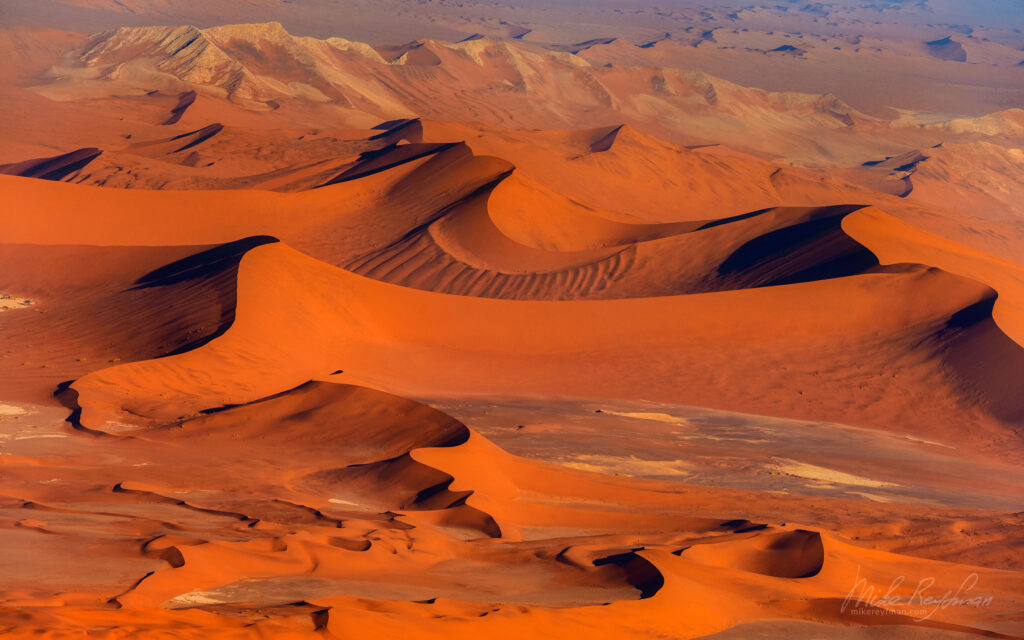
Widely considered one of the oldest deserts in the world, the Namib stretches along Namibia’s Atlantic coastline for more than a thousand miles. It is famous for its towering red dunes, some of which rank among the tallest on the planet, particularly around Sossusvlei. The desert’s eerie beauty is heightened by Deadvlei, a white clay pan dotted with the blackened skeletons of camel thorn trees that died centuries ago but have never decomposed in the dry air. The Namib also supports remarkable wildlife adapted to extreme conditions, including the desert elephant and the Namib beetle, which collects drinking water from coastal fog on its own back.
2. Algeria: The Sahara Desert
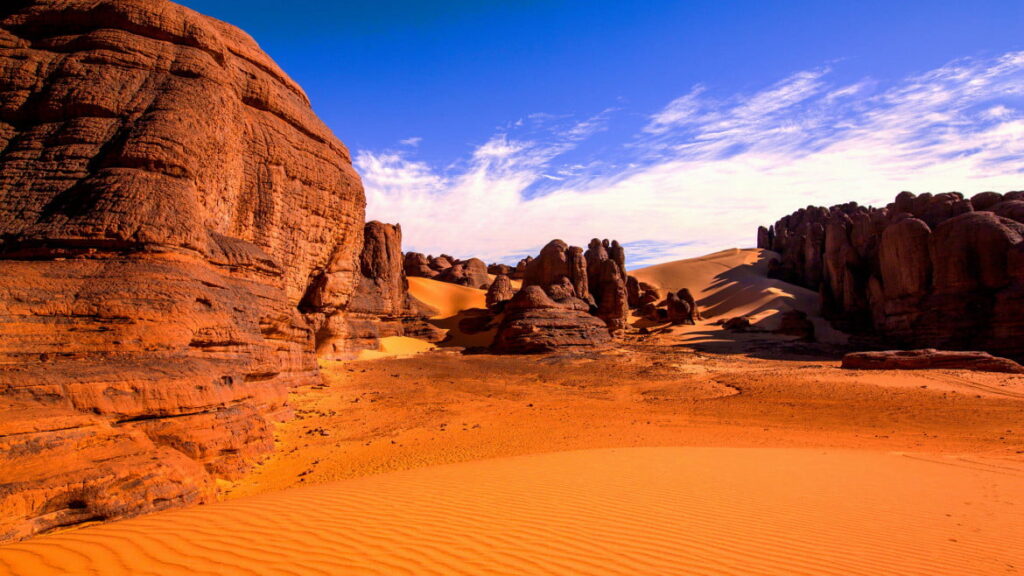
Algeria holds a substantial portion of the Sahara, the largest hot desert in the world, covering much of North Africa. Within its borders lie the Tassili n’Ajjer plateau, a UNESCO World Heritage Site renowned for ancient rock art depicting a Sahara that was once green and teeming with life. The Grand Erg Oriental and Grand Erg Occidental, two vast seas of shifting sand dunes, draw travellers keen to witness golden landscapes that seem to stretch endlessly toward the horizon. Beyond its natural grandeur, the Algerian Sahara has long shaped trade routes and Berber and Tuareg cultures that continue to thrive in oasis towns.
3. Egypt: The Western Desert
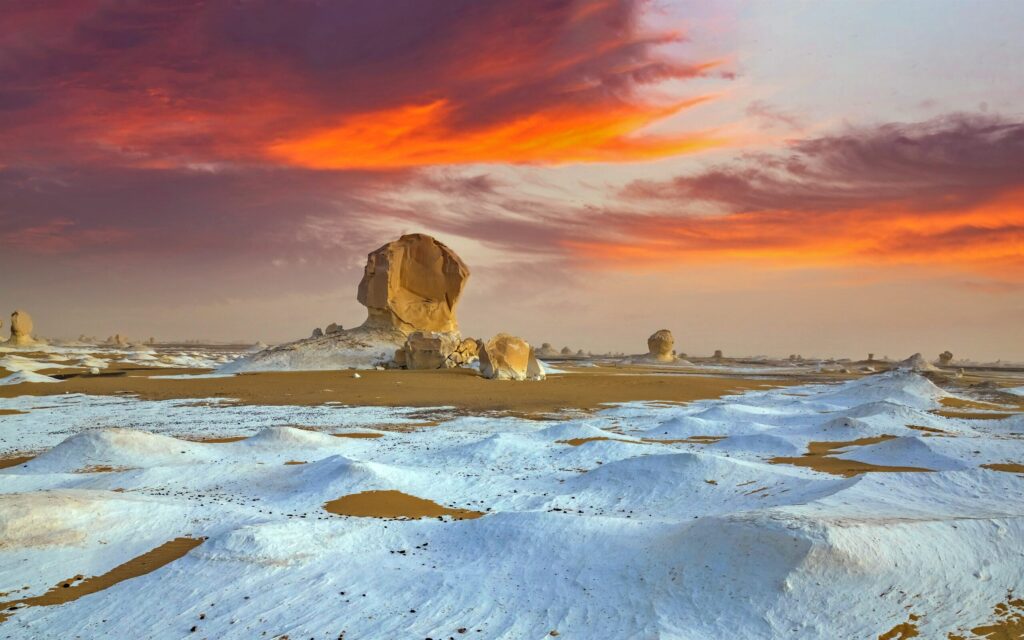
Although Egypt is best known for the Nile and its ancient monuments, roughly two-thirds of the country lies within the Western Desert, part of the greater Sahara. This region is home to extraordinary natural features such as the White Desert, where wind erosion has carved chalk rock formations into surreal shapes resembling mushrooms and animals. The Siwa Oasis, tucked near the Libyan border, offers freshwater springs, salt lakes and the remains of an ancient temple once visited by Alexander the Great. The Great Sand Sea, straddling the border with Libya, further demonstrates the sheer scale of Egypt’s desert terrain.
4. Botswana: The Kalahari Desert
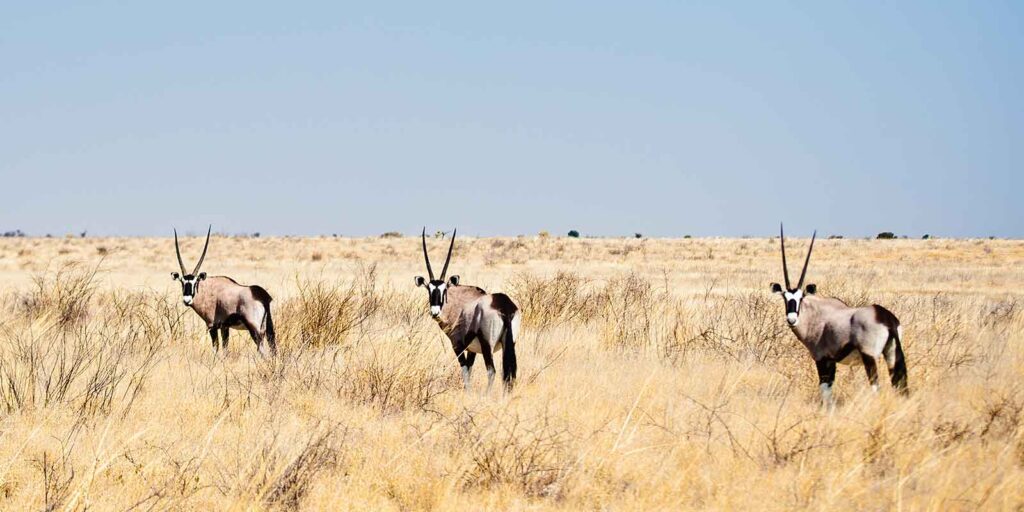
The Kalahari spans much of Botswana and extends into neighbouring countries, though Botswana contains its largest share. Unlike many deserts, the Kalahari is technically semi-arid, receiving just enough rainfall to sustain grasses, acacia trees and a surprising abundance of wildlife, including lions, meerkats and herds of springbok. The Central Kalahari Game Reserve is one of the largest protected areas in Africa and offers visitors a rare chance to experience true wilderness. The Kalahari is also the ancestral home of the San people, whose deep knowledge of tracking and survival in this environment has been passed down for generations.
5. Chad: The Ténéré Desert
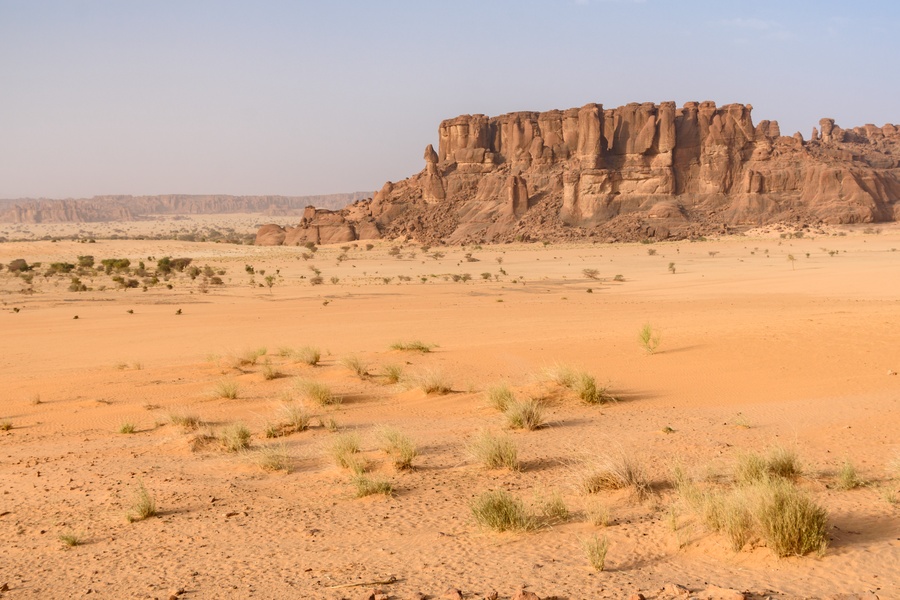
Located within the Sahara in northern Chad, the Ténéré is often described as one of the most remote and inhospitable places on Earth, yet it holds undeniable allure. Its landscape ranges from flat gravel plains to dramatic dune fields and the striking sandstone spires of the Ennedi Plateau, another UNESCO World Heritage Site celebrated for its natural arches and ancient rock paintings. The Ténéré also cradles the Aïr Mountains region nearby, and the whole area was once traversed by camel caravans transporting salt and goods across the Sahara. Despite its harsh conditions, the Ténéré supports unique flora and fauna, including the rare addax antelope.