

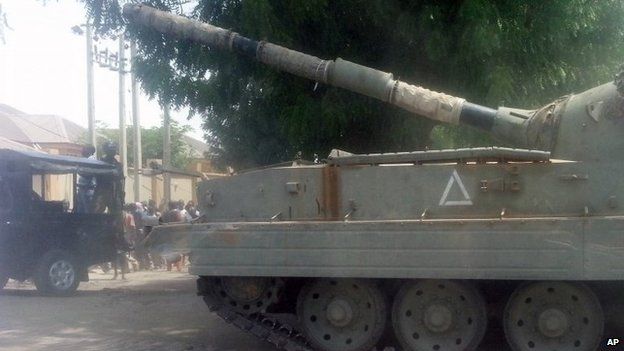
Amnesty International, has called for immediate prosecution of soldiers involved in the alleged killing of 640 recaptured detainees at the Giwa Barracks in Borno, two years ago.
The international human right body in a press statement, Monday, said the detainees many arbitrarily arrested in mass screening operations – were killed after they fled the barracks in Maiduguri, Borno state on 14 March 2014 following a Boko Haram attack.
To mark the anniversary of this massacre, Amnesty International campaigners will be gathering outside Nigerian embassies around the world to call for independent investigations and prosecutions.
“It is shocking that two years after these horrific killings there has been no justice for the victims and their relatives,” said Netsanet Belay, Amnesty International’s Research and Advocacy Director for Africa.
“The lack of an independent investigation has meant that no one has been held to account for the killings, strengthening an already pervasive culture of impunity within the military.”
Amnesty International has extensively documented the events of 14 March 2014, interviewing dozens of witnesses, verifying video evidence of the killings and their aftermath and confirming the locations of mass graves through satellite imagery.
In June 2015 Amnesty International published extensive evidence of war crimes and possible crimes against humanity committed by the Nigerian military. The report found that the military extrajudicially executed at least 1,200 men and boys, and almost certainly many more, between 2012 and 2014. A further 7,000 detainees died in military detention as a result of starvation thirst, disease, torture and a lack of medical attention. Torture is routinely and systematically used by security forces in Nigeria, both during arrest and in detention. Soldiers arbitrarily arrested more than 20,000 suspects since 2011 and detained the overwhelming majority of them without access to their families or lawyers, without formal charges and without ever bringing them to court.
Amnesty International has repeatedly called on the Government of Nigeria to initiate independent and effective investigations into its evidence of crimes under international law and to implement critical safeguards against human rights violations.
Yet, despite repeated promises by President Buhari and his government that Amnesty International’s report would be looked into, no concrete steps have been taken to begin independent investigations. Many safeguards remain absent, for example suspects continue to be held in military detention without access to their lawyers or families, without charge and without being brought before a judge.
After more than nine months in office, President Buhari must take urgent action to provide justice for the conflict’s thousands of victims and prevent such violations occurring again.
“In the two years since the Giwa killings, the pattern of unjustified use of lethal force by the military has continued with no one held accountable,” said Netsanet Belay.
“From Giwa to Zaria, from the north east to the south east, the time has come to break the cycle of impunity that has gripped Nigeria. This should start with justice for the Giwa 640.”