

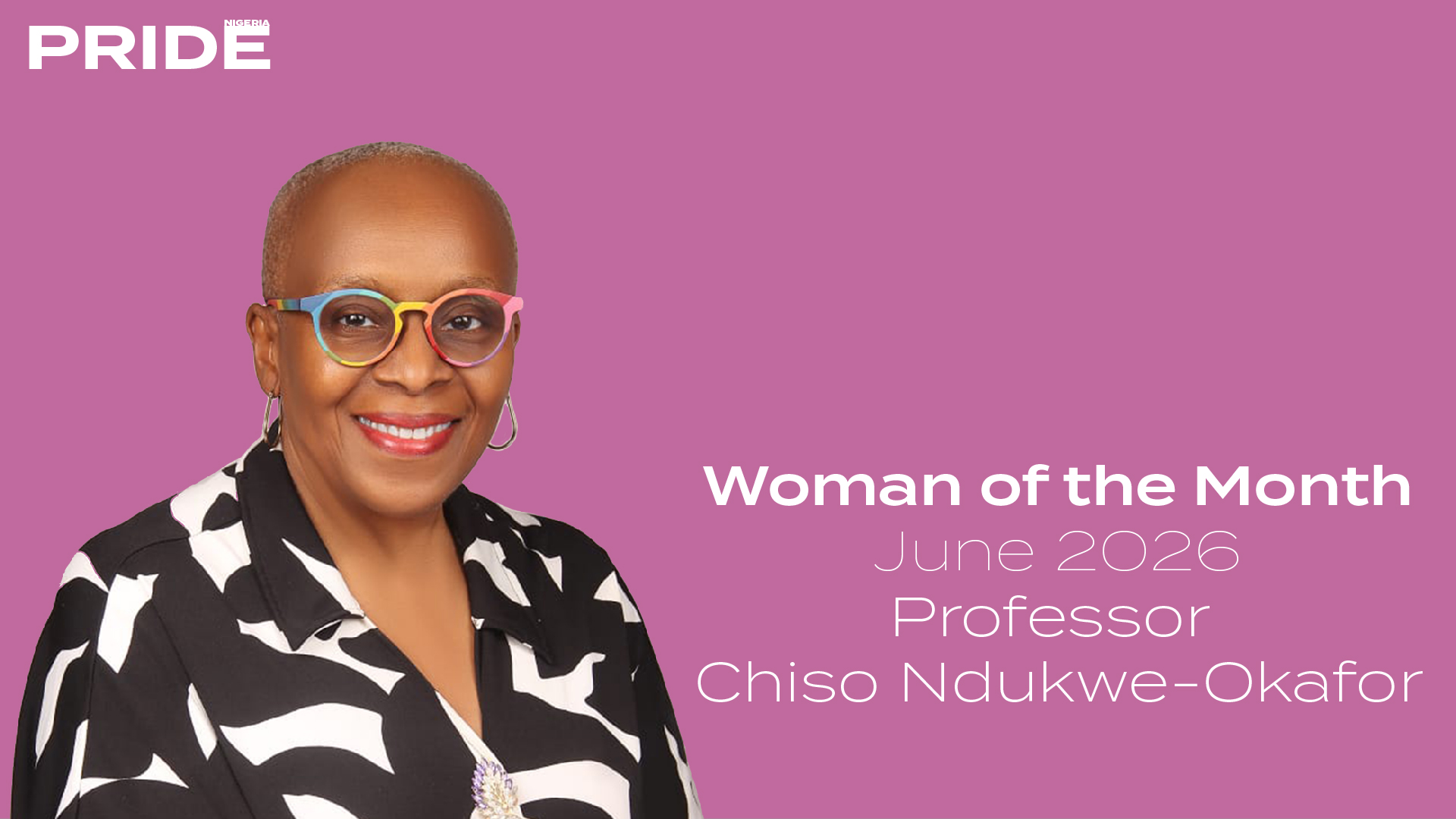
Professor Chiso Ndukwe-Okafor is the Executive Director of the Consumer Advocacy and Empowerment Foundation (CADEF) in Nigeria, a non-profit organisation dedicated to protecting, empowering, and enlightening consumers. Under her leadership, CADEF has championed the rights of vulnerable communities particularly women, youth, and persons with disabilities (PWDs) by advancing economic autonomy, digital inclusion, and social justice.
A key dimension of her work includes strategic collaboration with regulatory agencies and law enforcement institutions to strengthen consumer protection frameworks and enhance market accountability. Prof. Ndukwe-Okafor has led efforts to build capacity through targeted training, joint initiatives, and stakeholder dialogues that improve the enforcement of consumer rights.
Through partnerships with local and international stakeholders, CADEF has rolled out initiatives that promote financial literacy, a green and inclusive economy, responsible use of AI, and access to digital financial services especially for marginalised and underserved populations.
A passionate advocate for equality and women’s empowerment, Prof. Ndukwe-Okafor has developed and implemented programmes that economically empower women by equipping them with tools to navigate financial systems and participate meaningfully in economic development. Her entrepreneurship training and mentorship initiatives have fostered economic independence and innovation across various communities.
Prof. Ndukwe-Okafor is an educator, software developer, serial entrepreneur, motivational speaker, and author, with 30+ years of experience in higher education and advocacy. She has held academic leadership roles including Professor of Business and Information Technology, Dean, and Department Chair, and served as Co-Principal Investigator for a U.S. National Science Foundation grant.
Her international footprint includes delivering strategic design, policy advisory, and capacity-building programmes in the United States, Nigeria, Kenya, and Zambia, focused on inclusive development and institutional strengthening.
She holds an MBA, MPA, and Ed.D., and is co-owner of Anyworkman Services, a technology-enabled service platform. As co-founder of several tech-based ventures, she leverages digital innovation to empower communities and scale impact. Prof. Ndukwe-Okafor also serves on multiple advisory boards and is committed to unlocking the potential of underserved populations through innovation, skills development, and policy advocacy.
In this Woman of the Month interview, Prof. Ndukwe-Okafor talks women leadership, consumer rights, and technology for development.
Your career spans entrepreneurship, advocacy, and academia. What experiences shaped your passion for creating impact across these diverse fields?
My journey has never been a straight line, and that fluidity is precisely what makes it exciting and meaningful. Growing up in Nigeria, I was acutely aware of the systemic gaps where ordinary people were left unprotected, whether as consumers, citizens, or learners. That friction became my compass.
Academia provided the initial platform for this work. Shaping higher education and workforce programmes in the United States and beyond, taught me how to scale human capital and dismantle barriers to access for underserved communities. But I quickly realised that ideas need market viability to survive. Entrepreneurship became my operational engine; founding ventures like SRCG Logistics and Consulting helped me understand how to translate vision into sustainable, scalable infrastructure.
Today, my advocacy through Consumer Advocacy and Empowerment Foundation (CADEF) where I serve as the Executive Director, and other global networks, is where these worlds converge. True advocacy is not just about identifying a wrong, it is about using data, technical literacy, and economic strategy to redesign the regulatory frameworks that protect people. I have never been comfortable watching a broken system operate unopposed. Wherever I have seen a gap, in consumer protection, in education, in technology access, I have felt compelled to step in and build the infrastructure to close it.
Who were some of the mentors who influenced your leadership journey?
Leadership is rarely a solitary pursuit; it is an inheritance shaped by the giants who precede us. I have been fortunate to stand on shoulders that provided not just sight, but strategic clarity at the inception of my career.
Spiritually, my path was anchored by a father who taught me to understand my divine identity and ownership, reclaiming my place as a restored, uncompromised voice. This instilled a deep conviction that leadership is a stewardship, not a title.
In academia, my mentors modelled an unyielding rigour, the kind that interrogates structural assumptions and demands a moral standard far higher than mere institutional compliance. They taught me that intellectual data is useless unless it serves human dignity.
Within global civil society, my journey has been shaped by pioneers of the international consumer movement, who demonstrated that advocacy is most formidable when it is data-driven, sustained by cross-border networks, and fiercely protective of everyday realities.
And at home, I was profoundly shaped by my family, by the expectation that loving God is a responsibility, not merely a privilege, and that those who receive opportunities must turn around and create them for others. That lesson has never left me.
Looking back on your career, is there anything you wish you could have done differently?
I approach this question with caution, because regret is only useful if it serves as a diagnostic tool for future strategy. Looking back with total honesty, my single critique is this: I wish I had committed to building institutional architecture much earlier in my journey.
For many years, I operated with deep commitment and broad execution, navigating by a strong internal compass but without fully decoding the strategic ‘why’ of institutional durability. I was highly effective at achieving outcomes, but I had not yet realised that individual momentum cannot outlive a well-constructed system.
My work with CADEF, forging international frameworks with bodies like Consumers International and anchoring multi-sectoral governance models, finally brought that ‘why’ into sharp focus. I realised that true, lasting impact requires permanent tables, robust regulatory compliance, and scalable infrastructure. Had I mastered the necessity of this structural architecture twenty years ago, the scale of what we are deploying today would be even further advanced. But leadership is a continuous evolution, and that realisation is exactly what drives the precision of my work today.
How have you been able to find balance between your professional career and the family life you want?
I want to be honest rather than offer a picture-perfect answer: balance, as it is usually described, was not always available to me, and I am not sure it is available to most women doing serious work in the world. What I found instead was integration.
My family has always understood that the work is not separate from who I am; it is an expression of who I am. The values I bring to CADEF, to my students, to consumer advocacy are the same values I bring home. That coherence has been important. My son did not grow up with a mother who left herself at the office door; he grew up watching a woman who believed fiercely in something and acted accordingly. I believe that is its own kind of legacy.
I have also leaned on partnership, with my husband, with colleagues who became extended family, with communities both in Nigeria and abroad that held us all. None of this is done alone, and I have never pretended otherwise.
What I deliberately protect is presence. When I am with family, I am with family. I have grown more disciplined about that over the years, not less. And I have learned that saying no to some things is not a retreat; it is how you make space for what matters most.
As Executive Director of Consumer Advocacy and Empowerment Foundation (CADEF), you champion consumer rights and empowerment. What inspired you to focus on consumer advocacy?
Consumer advocacy chose me as much as I chose it.
When I returned to engage deeply with Nigeria’s development landscape, I kept encountering the same pattern: ordinary Nigerians, buying food, paying for electricity, using financial services, purchasing medicines, were being systematically shortchanged, and they had neither the information nor the institutions to push back effectively. Markets were operating, but not fairly. Regulators existed, but their reach was uneven. And consumers, who are the reason any economy exists at all, were being treated as an afterthought.
That is both a justice issue and a development issue. An economy cannot grow sustainably on the back of exploited consumers. Communities cannot thrive when infant formula contains added sugars that endanger babies, when electricity tariffs change without notice, and when digital financial platforms obscure fees from users who cannot afford to lose money. Consumer rights are not a luxury issue; they are foundational.
CADEF became the vehicle for that conviction. We operate at the intersection of regulation, civil society, and community, working with bodies like the Federal Competition & Consumer Protection Commission Lagos (FCCPC), Central Bank of Nigeria (CBN), Nigerian Electricity Regulatory Commission (NERC), National Agency for Food and Drug Administration and Control (NAFDAC), and Standards Organisation of Nigeria (SON), while staying grounded in the realities of the people those institutions are supposed to serve. Our work on infant food safety, on clean energy access, on food safety and security, on green economy, on sustainable consumption and research, and on digital financial inclusion, these are all expressions of the same belief: that every Nigerian consumer deserves to be treated with dignity and honesty.
What are the big challenges regarding consumer advocacy in Nigeria, and how can we overcome them?
The challenges are real and interconnected, but none of them is insurmountable.
The first is awareness. Most Nigerian consumers do not know their rights, and in the absence of that knowledge, they cannot assert them. We need sustained, culturally grounded consumer education that reaches people in languages they speak, through channels they trust, about the products and services they actually use every day.
The second is regulatory coherence. Nigeria has capable regulatory bodies, the FCCPC, NAFDAC, SON, NERC, CBN, and NCC, to name a few, but their mandates can overlap, their enforcement capacities vary, and coordination between them is not always consistent. Strengthening inter-agency collaboration and funding, and ensuring that enforcement follows policy pronouncement, are critical priorities.
The third is civil society’s capacity. Consumer advocacy organisations in Nigeria, including CADEF, are doing essential work on limited resources. Investing in these organisations, including through international partnerships and domestic philanthropy, is not optional if we want a functioning consumer protection ecosystem.
The fourth is data. Effective advocacy requires evidence. We need better systems for collecting, analysing, and publicising consumer complaints data, so that patterns of abuse become visible and actionable.
And the fifth, which underpins all the others, is political will. Regulation without enforcement is cosmetic. We have seen progress, but we need governments and regulators to treat consumer protection not as a technical matter but as a democratic imperative. When consumers are protected, markets work better, trust increases, and economic growth becomes genuinely inclusive.
You have dedicated significant effort to advancing women’s economic independence. What barriers continue to hinder women’s full participation in the economy, and what practical steps can governments, private sector organisations, and communities take to accelerate women’s economic empowerment?
The barriers are structural, cultural, and financial, and they compound each other.
Structurally, women across Africa continue to face unequal access to land, credit, and formal employment. Legal frameworks that look equitable on paper often operate in contexts where informal norms override them. Women entrepreneurs struggle to access collateral-based financing because they are less likely to own the assets that banks require. Women in formal employment hit ceilings, visible and invisible, that have nothing to do with their competence.
Culturally, the burden of unpaid care work, childcare, eldercare, and household management falls disproportionately on women. This is not a personal arrangement; it is a structural subsidy that the economy extracts from women without acknowledgment or compensation. Until we name it and address it, we will continue to wonder why women’s economic participation plateaus.
Financially, the gap in women’s access to digital financial services, particularly in rural and peri-urban areas, remains significant. Financial exclusion compounds every other form of exclusion.
What can be done? Governments must close legal gaps, fund women’s entrepreneurship through dedicated financing instruments, and invest in care infrastructure, in particular, childcare, that enables women to participate fully in the economy. The private sector must move beyond gender diversity as a branding exercise and implement pay equity, flexible work policies, and promotion pipelines that reflect genuine commitment. And communities must change the conversation at home, domestic violence is wrong, raising boys who understand that domestic responsibility is shared, and daughters who know their ambition is legitimate.
For my part, the work CADEF does, protecting PWDs, women consumers, supporting adolescent girls’ access to health information, and building women’s financial literacy, is part of the same project. Economic empowerment is not one thing. It is many things, working together.
As co-founder of several technology ventures, what do you consider necessary to enable technology to be a positive lever in solving societal problems?
Technology is an extraordinarily powerful tool, but only as good as the values, governance, and intentions of those deploying it. I have seen technology transform access to education, financial services, and health information. I have also seen it amplify exploitation, entrench inequality, and extract value from communities without returning it.
What makes the difference?
First, purpose-led design. The question must always be: who is this for, and how do we know it is serving them? Technology that is designed with and for the communities it intends to serve, not simply deployed at them, is far more likely to create genuine value. This means involving end users in design, testing in real conditions, and being willing to iterate based on what you find.
Second, governance and accountability. Particularly in Nigeria and across Africa, as we rapidly adopt digital financial platforms, AI tools, and data-intensive services, we need robust frameworks to ensure that users’ rights, especially those of vulnerable users, are protected. This is not anti-innovation; it is what makes innovation sustainable.
Third, infrastructure equity. The most sophisticated application is useless to someone without reliable power or connectivity. Our advocacy for distributed energy resources, solar access, and net billing frameworks is partly about this: technology-enabled solutions only empower people when the foundational infrastructure is in place.
And fourth, talent and ownership. African problems solved with African expertise, African data, and African-owned enterprises, that is the model that creates lasting value. Capacity-building is not a nice-to-have; it is the whole point.
What legacy would you like to leave for the next generation of women leaders?
I want the next generation of women leaders to know, not just believe, but know in their spirit, that they do not have to earn the right to lead by making themselves smaller. To know that their antecedents do not define them, but rather that God has created them completely whole in His image to tell His story.
I want them to inherit institutions that are stronger because we built them deliberately: organisations with governance structures, documentation, partnerships, and funding that can survive the departure of any one founder. Too much of what women build in Africa disappears when they step back because it was held together by charisma and sacrifice rather than institutional architecture. I want to leave behind things that last.
I want them to inherit networks, real, substantive networks of women who call each other, recommend each other, fund each other, and hold each other accountable. Not just sisterhood as sentiment, but sisterhood as infrastructure.
And I want them to understand that advocacy is not a detour from development, it is the road itself. Restoring breaches, changing policy, holding institutions accountable, insisting on rights, this is serious, technical, necessary work. I hope the young women watching CADEF’s work come to understand that, and that some of them choose to carry it forward.
What I want most, perhaps, is for them to be unafraid. Not reckless, careful, strategic, well-prepared, but unafraid. The world needs what they have, and they should walk toward it with confidence.
What do you take pride in?
I take pride in God and what He is building through me, in my children (spiritual and natural) and my husband, and the God-given values they carry, the ways they move through the world, the care they show to others. That is the first and most personal answer.
I take pride in every student I have taught who went on to do something meaningful, who carried a spark they first found in a classroom and turned it into a life of contribution. More than thirty years of teaching leaves you with many such people in the world, and they are a source of quiet joy.
I take pride in CADEF, in what it stands for and in what it has produced. The infant food safety work we have led, pushing back against added sugars marketed to babies. The clean energy access project is helping Nigerian families understand their rights in the energy transition. The financial inclusion advocacy equipping women and young people, and PWDs to navigate digital financial systems safely. These are not small things. They affect real people.
I take pride in representing Nigeria and African consumers on international platforms at OECD, the UN, and the WTO, through Consumers International, and doing it in a way that centres African realities and African voices.
And I take pride in still being here, still building, still believing. It would have been easier at many points to step back, to conclude that the obstacles were too large or the resources too few. I did not. I am proud of that persistence, not as stubbornness, but as faith: faith in God and His purpose for me, and that the work matters, that people deserve better, and that it is worth showing up every single day to say so.