

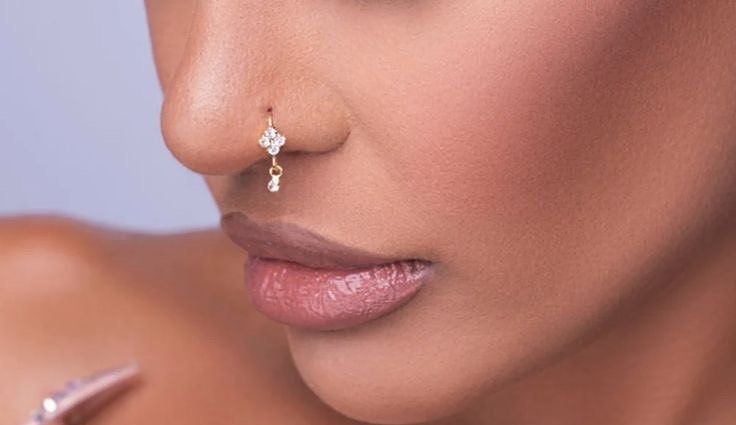
For something so small, the nose ring has travelled an extraordinary journey through history. Long before it became a fashion statement on catwalks, music stages, or social media, it carried deep cultural, spiritual, and social meaning in different parts of the world. Across centuries and continents, this tiny piece of jewellery has symbolised wealth, identity, marriage, rebellion, and personal expression.
Today, nose rings are worn by people of all ages and backgrounds, often simply because they like the way they look. Yet behind every piercing lies a fascinating story that stretches back thousands of years.
Ancient beginnings
The earliest recorded use of nose rings dates back around 4,000 years to the Middle East. References to nose jewellery appear in ancient texts, including the Bible, where nose rings were presented as valuable gifts and symbols of beauty and prosperity.
In many early societies, precious metals and gemstones were worn not only for decoration but also to display social standing. A nose ring often indicated that its wearer came from a wealthy or respected family.
From the Middle East, the tradition gradually spread to other regions through trade, migration, and cultural exchange.
The tradition in India
Perhaps no country is more closely associated with nose rings than India. Historians believe the custom arrived there from the Middle East several centuries ago, becoming deeply rooted in Indian culture by the sixteenth century.
In many communities, women wore nose rings as part of their bridal jewellery. The piercing was often linked with marriage and womanhood, making it an important part of wedding traditions.
Different regions developed their own distinctive styles. Some preferred small elegant studs, while others favoured elaborate rings decorated with pearls, diamonds, or coloured stones. In certain parts of the country, larger nose rings remain an essential part of traditional bridal attire today.
Some cultural beliefs also associate nose piercings with women’s health and childbirth, although these ideas are rooted in traditional practices rather than modern medical evidence.
A symbol across cultures
Nose rings have appeared in many cultures beyond India.
Among several African communities, nose jewellery represented wealth, maturity, or family status. The size and material of the ring could communicate social standing or cultural identity.
In parts of Central and South America, indigenous groups wore nose ornaments during ceremonies and important rituals. They were often crafted from gold or other locally available materials and reflected spiritual beliefs as well as artistic traditions.
Some nomadic communities also used nose rings as portable wealth. Jewellery could be sold or traded during difficult times, making it both decorative and practical.
The rise of modern fashion
By the twentieth century, nose rings had begun appearing in Western countries, although they were not immediately accepted as mainstream fashion.
During the nineteen sixties and nineteen seventies, increasing travel introduced many people to cultures where nose piercings were common. Interest in global fashion, music, and alternative lifestyles encouraged more people to embrace the look.
In the nineteen eighties and nineteen nineties, nose rings became associated with youth culture, musicians, artists, and those who wanted to challenge traditional ideas of appearance. For some, wearing a nose ring represented independence and individuality.
As fashion evolved, public attitudes gradually changed. What was once viewed as unconventional slowly became more widely accepted.
Nose rings today
Today, nose rings are one of the most popular forms of body piercing worldwide. Celebrities, athletes, professionals, students, and creatives all wear them, proving that this ancient accessory has found a place in modern life.
Designs have also expanded considerably. Wearers can choose from tiny diamond studs, simple gold hoops, silver rings, decorative chains, or intricate custom pieces that reflect their personal style.
For many people, a nose ring has no cultural or religious significance. It is simply another way to express personality and confidence. Others continue to wear it as a celebration of family heritage or cultural identity.
More than a trend
Fashion trends come and go, but the nose ring has shown remarkable staying power. Its history reveals that it has never been merely an accessory.
Its meaning has changed with time, adapting to new cultures and new generations without losing its connection to the past.